
On June 30, 2024, a father in Kokomo, Indiana called 911 to report his 14-year-old daughter as a runaway. One of the patrol officers who answered that call was Sinmi Asomuyide, a probationary officer of the Kokomo Police Department. By the end of that night, according to the record a federal jury later heard, the officer sent to find her had turned off his body camera, traded messages with her through the evening, picked her up in uniform on a pretext, handcuffed her in the back of his squad car, driven her to an empty warehouse parking lot, and sexually assaulted her.
What followed is the rest of this file: the lies he told Indiana State Police detectives, the messaging application he deleted — his phone was searching how to delete it within hours of the assault — the DNA the State Police found in his patrol car, a department that fired him inside the month, an Indiana prosecution, and then a federal one — United States v. Sinmi Asomuyide, No. 1:25-cr-00155-JRS-MJD, in the Southern District of Indiana. A federal jury convicted him on all three counts in June 2026. On November 4, 2026, Chief District Judge James R. Sweeney II sentenced him to 40 years in federal prison, followed by three years of supervised release.
And the Justice Department states in its sentencing release that this was not the first allegation of its kind against him: at §06, printed as an allegation and attributed to the Department, is the earlier service in Portsmouth, Virginia that ended in a forced resignation — and what he wrote about it when he applied to the Kokomo Police Department.
This file is built from the paper: the filed indictment and penalty sheet, read here line by line; a later filing in the same docket; the Justice Department’s indictment, conviction and sentencing releases, read in full; and the Kokomo Lantern’s reporting of the Department’s own statements. Every claim stands at the grade its evidence earns, and §09 lists every pull that would raise a grade further. One rule governs throughout: the girl in this record is never named, described or identified — here, she is a 14-year-old who ran away, and that is all.
Sinmi Asomuyide came to the Kokomo Police Department from Virginia. The Kokomo Lantern, reporting his arrest in July 2024, records that he had served as a police officer with the Portsmouth, Virginia Police Department for nearly three years before relocating to Kokomo. What ended that service — and what he told Kokomo about it — is a separate section of this file (§06), printed at the grade it carries.
In Kokomo he was a patrol officer, and still a probationary officer — in his first, probationary period with the department — when the events of June 30, 2024 occurred. The indictment in his federal case fixes the basics in its opening lines: on or about June 30, 2024, he was a sworn officer with the Kokomo Police Department, on duty and working in his capacity as a KPD officer, and he was 31 years old. He was 33 when a federal jury convicted him and when the court sentenced him.
His exact hire date in Kokomo is not in any record this file could reach; it is listed among the open pulls at §09. What the record does fix is how short the leash already was: he was a probationary officer, and when the allegation reached his chief on July 1, 2024, the department’s internal investigation ended in his firing on policy violations inside the same month as the crime (§04).
Everything in this section is the record the federal government presented and a jury credited — the Justice Department’s own summary of the court documents and the evidence at trial, stated here at that level and no further.
On June 30, 2024, a father called 911 to report his daughter, 14 years old, as a runaway. Asomuyide and another Kokomo officer responded and found her at the home of another underage girl. Asomuyide took her into custody and transported her to the Kinsey Youth Center. As he entered the facility’s sallyport garage, he turned off his body-worn camera, in violation of department policy. He took her cellphone and used it to call his own personal phone number, questioned her about her sexual history, and, after a pat-down search turned up a vape pen, told her he would contact her later to return it.
A family friend collected her from the Youth Center. As she left, she sent him the username for one of her social media accounts; he asked for another. They messaged through the evening while he finished his shift, and she remained under the impression, the Department of Justice records, that he intended to return the vape pen.
Later that evening he built himself a cover story: he returned to the police station and requested overtime from 10:00 p.m. to midnight, saying he would be finishing paperwork. Instead he left the station, drove in his uniform to the family friend’s apartment and demanded to speak to her privately about where she should stay. He handcuffed her in the back of his squad car and drove — as the squad car’s own GPS data later showed — to an empty warehouse parking lot. There he sexually assaulted her. Then he put the handcuffs back on and drove her back to the apartment complex.
She reported the assault to family members and to law enforcement.
The Indiana State Police investigated. In Asomuyide’s patrol vehicle, forensic examiners found a dried semen stain on the center console — and it matched his DNA.
About a week after the assault — the indictment dates the interview on or about July 8, 2024 — State Police detectives interviewed him, and he lied to them. The indictment itemizes the lies — the five false claims are the original indictment’s own (Count 2) — and the jury convicted him on the superseding indictment’s witness-tampering count; the Justice Department’s summary of that verdict describes the jury’s finding as denying the sexual contact and lying about the presence of other corroborating evidence. The five claims: he claimed he had attempted to call the girl’s father that night, which he had not; he denied driving her to a parking lot; he denied inappropriately touching her; he denied causing her to touch him; and he denied any reason for his semen to be in his squad car. To the detectives he offered an innocent explanation for his phone number being in play — that she might have overheard him reciting it to a Youth Center employee — and he claimed she had contacted him on a work phone. Kokomo officers are not issued work phones.
His own phone told the rest. Within hours of the assault, it recorded his searches: “how to delete text me account” and “TextNow delete account.” The messaging application he had used to communicate with her was deleted — the act a federal grand jury would later charge, in a superseding indictment, as destruction of records (§05).
The cover-up is not an epilogue to this case; it is two of the three counts of conviction. The jury found the lies and the deletion proved alongside the assault itself.
The Kokomo Police Department’s own account, given to the Kokomo Lantern and carried in the department’s release, runs on a short clock. On July 1, 2024 — the day after the runaway call — Chief Douglas Stout was contacted by another law-enforcement agency about a criminal allegation involving a probationary officer in his department. The administration immediately contacted the Indiana State Police and asked them to investigate. The department’s preliminary internal investigation found “multiple policy violations,” and Asomuyide was terminated on the policy violations alone — before any arrest, and on the department’s own paper rather than the criminal case.
On July 22, 2024, the Indiana State Police arrested him in Tipton County. He was booked for safekeeping on preliminary charges of sexual misconduct with a minor, sexual battery, child seduction and official misconduct; the Lantern reported a $30,000 cash bond.
The Lantern later reported those charges as an Indiana case in Howard Superior Court I, and in July 2025 the Lantern reported a state trial date of September 26, 2025. This file prints the Indiana charges exactly as they were brought and claims no ending for them: the state case’s number and its present status — after the federal conviction at §05 — are not in any record this file could reach, and the pull that would settle them is listed openly at §09. What is certain is the sequence: whatever Indiana’s case became, the federal case is the one that has been tried, decided and sentenced.
United States v. Sinmi Asomuyide, No. 1:25-cr-00155-JRS-MJD, U.S. District Court for the Southern District of Indiana, Indianapolis Division. The indictment, the penalty sheet and a later docket filing were read for this file from the court’s own documents; what they say is printed here at that grade.
The indictment — filed July 22, 2025, unsealed July 24, 2025. Two counts:
• Count 1 — Deprivation of Rights Under Color of Law (18 U.S.C. §§ 242 and 250(a) & (b)(2)): that on June 30, 2024, acting under color of law as a Kokomo officer, he willfully deprived the girl of her right to bodily integrity — and that his conduct included kidnapping and involved abusive sexual contact of a child under the age of 16. The penalty sheet filed with the indictment carries the exposure: up to life in prison.
• Count 2 — Witness Tampering (18 U.S.C. § 1512(b)(3)): the July 8, 2024 interview — misleading conduct toward the Indiana State Police, in the five false claims itemized at §03.
The superseding indictment — February 12, 2026. A later filing in the docket records that a three-count superseding indictment was returned that day. The third count is the destruction of records: the deletion of the messaging application he had used to communicate with her, carried out to cover up the assault.
The verdict — June 5, 2026. After a five-day trial, a federal jury found him guilty on all three counts. The Justice Department’s statement of the verdict is exact about what the jury found: that he willfully deprived the victim, then 14 years old, of her constitutional rights by sexually assaulting her; that his conduct included kidnapping and abusive sexual contact of a child under the age of 16; that he lied to the Indiana State Police to cover up the assault, denying the sexual contact and lying about the presence of other corroborating evidence; and that he deleted the messaging application he had used to communicate with her before the assault, in an attempt to cover it up.
The case was investigated by the Federal Bureau of Investigation’s Indianapolis Division and the Indiana State Police — the credit as the Justice Department’s sentencing release gives it; its conviction release credits the FBI alone — and prosecuted by Assistant U.S. Attorney Peter Blackett, Civil Rights Division Trial Attorney Anita Channapati, and former Senior Sex Crimes Counsel Tara Allison. The sentence is at §07.
What stands in this section is an allegation, printed as one. It appears here because the United States Department of Justice stated it in its own sentencing release, as part of the record in the federal case — not because any Virginia proceeding in this file’s hands has adjudicated it. No Virginia charge or document is in this file, and no person other than Asomuyide is named in the Department’s account.
The Department’s words: “This is not Asomuyide’s first instance of sexual misconduct with a minor. He was previously employed as a police officer at the Portsmouth (Virginia) Police Department (PPD) and was forced to resign after an allegation that he had sexual intercourse with a 15-year-old while he was off duty. When he later applied to the Kokomo Police Department, he misrepresented what he did, stating that he was forced to resign from PPD because he was ‘hanging out’ with a 17-year-old girl who told him that she was 19.”
Read at exactly its grade, the paragraph says three things. A prior allegation of sexual misconduct with a minor existed at Portsmouth, and it ended his service there in a forced resignation — that is the Department’s account of an allegation, and this file prints it as one. The misrepresentation on the Kokomo application is stated by the Department as part of the trial record. And the sequence the Department lays out is the sequence that matters here: an officer forced out of one department over an allegation involving a minor was hired by another department, in another state, and put on patrol — where a 14-year-old runaway was placed in his squad car.
What Kokomo knew, and what it asked, when it hired him is a question this file puts to the record rather than answers; the hire-date and personnel pulls are listed at §09.
On Wednesday, November 4, 2026 — one week before this file was built — Chief District Judge James R. Sweeney II sentenced Sinmi Asomuyide to 40 years in federal prison, followed by three years of supervised release, on counts one, two and three of the superseding indictment. A docket filing the next day confirms the sentencing and its counts from the court’s own paper.
The total is what the record in hand states. How the 40 years is composed count by count — and any fine or restitution — stands in the judgment, which this file has not yet reached; it is the first of the open pulls at §09, and this file does not guess at it. The Seventh Circuit docketed Asomuyide’s appeal on November 6, 2026, as No. 26-3302.
The officials who brought the case said what the sentence was for, in words this file quotes exactly:
“The Department of Justice takes civil rights abuses seriously, including those committed by the small minority of police officers that betray public trust. This defendant will be held accountable for the kidnapping and sexual abuse of a child.” — Harmeet K. Dhillon, Assistant Attorney General, Civil Rights Division
“This defendant exploited the badge in one of the worst ways imaginable. What makes these crimes particularly disturbing is that he used the very tools, training, and authority entrusted to him as a police officer not only to assault a vulnerable child, but to try to conceal it. The evidence told a different story, and today’s sentence sends a clear message that no one can use the authority of the badge as a shield from accountability.” — Tom Wheeler, U.S. Attorney for the Southern District of Indiana
“The very people entrusted with protecting children must never become the ones who victimize them. This defendant preyed on a 14-year-old girl and then attempted to cover up his crimes.” — Timothy J. O’Malley, Special Agent in Charge, FBI Indianapolis Field Office
One piece of docket housekeeping, printed so it is never misread: on November 5, 2026 the government moved to dismiss the original indictment — the two-count paper of July 2025 — because the superseding indictment had replaced it. The dismissal touches nothing that was tried or sentenced.
Every officer file in this library carries the same check: the subject’s record on the road — impaired-driving arrests, license actions, any driving history the paper carries.
For Sinmi Asomuyide, the check came back empty. Searches run for this file on November 11, 2026 — his name against impaired-driving and traffic terms across the news and court coverage, and through the full coverage of his 2024 arrest and his federal case — surfaced no traffic arrest, no impaired-driving case, and no road infraction of any kind in his name.
That is printed as exactly what it is: none found in the records searched, with the search stated — not a claim that none exists anywhere. The driving in this record was not a road offense; it was a squad car’s GPS track placing a handcuffed child in an empty warehouse parking lot, and it is weighed where it belongs, at §02.
This file stands on the court’s own documents — the indictment, its penalty sheet, and a post-sentencing docket filing, read firsthand — on the Justice Department’s releases, and on the hometown paper’s reporting of the department’s own statements. The pulls still open are listed here, each one a public record, each one named so this file’s grades can be raised in the open:
1. The federal judgment in No. 1:25-cr-00155-JRS-MJD — the per-count composition of the 40 years, any fine, any restitution, and the conditions of the three years of supervised release. The public docket mirror this file used carries the early filings and the post-sentencing housekeeping motion, not the judgment; the judgment is the document that completes §07.
2. The superseding indictment of February 12, 2026 (Docket 28) in full — the third count’s statute and wording, behind the destruction-of-records conviction at §05.
3. The Indiana case — the Howard Superior Court cause number for the 2024 charges of sexual misconduct with a minor, sexual battery, child seduction and official misconduct, and that case’s status after the federal conviction, from Indiana’s public case search.
4. His Indiana law-enforcement certification — the state academy’s record of the certification he held, and any decertification entry under his name.
5. His Bureau of Prisons record under the 40-year sentence — the register number, the facility, and the projected release date as the Bureau carries them.
6. His Kokomo hire — the hire date and personnel record behind §01 and §06: what the department knew, and what it was told, when it put a Portsmouth forced-resignation on patrol.
7. The appeal watch — The Seventh Circuit docketed Asomuyide’s appeal on November 6, 2026, as No. 26-3302. The grounds the appeal raises and its disposition are not yet in hand; this watch now follows them.
When a pull lands, this file is updated at this same address, in place, with the date of the update shown — the way every file in this library is kept.
Every file in the Public Court Records series, in one place. Counties: St. Joseph, Elkhart, Marshall, Allen, Marion, Hamilton, Hancock, Hendricks, Johnson and Sullivan in Indiana; Berrien, Cass and St. Joseph in Michigan; Middlesex in Massachusetts; Muscatine in Iowa; Will in Illinois; St. Tammany Parish in Louisiana; Sussex in New Jersey. Every file is free, forever.
Every claim in this file traces to the paper below, at the grade marked. Court documents and the Justice Department’s releases were read in full for this build.
THE COURT’S OWN DOCUMENTS (read firsthand; copies held with this file’s build records) — United States v. Sinmi Asomuyide, No. 1:25-cr-00155-JRS-MJD (S.D. Ind.): the Indictment (Docket 1, filed July 22, 2025) — the charges, the statutes, and the itemized false statements; the Penalty Sheet (Docket 6) — the exposure on each count; the government’s Appearance (Docket 4); and the Motion to Dismiss Indictment (Docket 94, filed November 5, 2026) — which fixes the superseding indictment’s date (February 12, 2026) and confirms the November 4, 2026 sentencing on counts one, two and three.
U.S. DEPARTMENT OF JUSTICE (read in full) — Office of Public Affairs, “Former Kokomo Police Department Officer Sentenced to 40 Years in Prison for Sexually Assaulting Minor, Lying to Investigators, and Destruction of Records” (November 5, 2026); U.S. Attorney’s Office, Southern District of Indiana, “Former Kokomo Police Department Officer Will Spend 40 Years in Federal Prison for On-Duty Sexual Assault of 14-year-old and Obstruction of Justice” (November 5, 2026) — the trial-evidence narrative, the Portsmouth account, and the officials’ statements; Office of Public Affairs and U.S. Attorney’s Office conviction releases (June 2026) — the jury’s findings; and the indictment announcement (July 24, 2025), as carried verbatim by EIN Presswire and digested by The Indiana Lawyer.
THE HOMETOWN PAPER — Kokomo Lantern: “KPD officer arrested on sex charges” (July 23, 2024) and “Ex-KPD officer charged with sexual assault” (July 2025), carrying the Kokomo Police Department’s own release — the July 1 notification, the internal investigation, the termination, the July 22, 2024 arrest and the preliminary charges; the same department release as carried by the Carroll County Daily News and the Boone County Daily News. The Indiana Lawyer’s indictment coverage (July 25, 2025) prints the federal cause number.
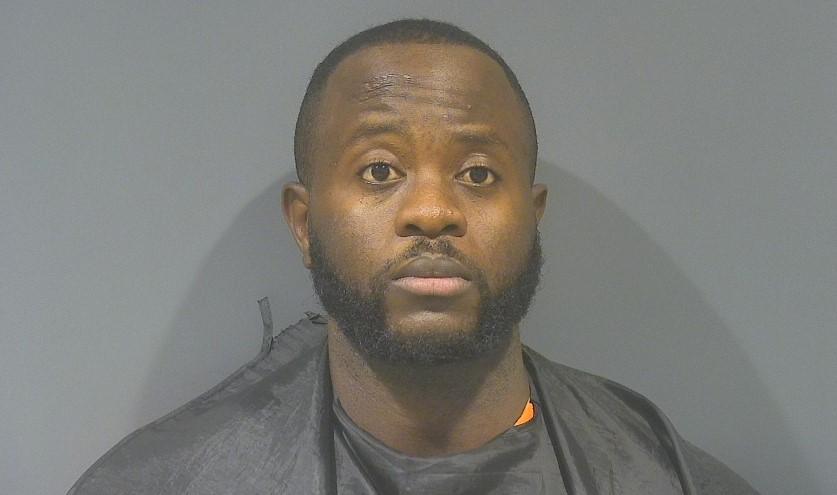
THE PHOTOGRAPH — the booking photograph on the front of this file was published by the Kokomo Lantern with its coverage of the federal indictment; the identical photograph was carried by indynewsdaily.com with its July 2025 coverage of the case, and appears again in The Sun’s July 2025 report. Three publications, one photograph, each in coverage naming him; this build viewed all three and verified the face and the frame in each.
NOT USED — social-media video summaries of the sentencing (narration beyond the releases); a syndicated round-up that misdates the assault by three years (the indictment fixes June 30, 2024); and the indictment’s own anatomical detail, which this file confirms for the charge and never reproduces.
Officers write tickets for every one of these. This section keeps the same record on the officer in this file.
THE CHECKS RUN FOR THIS FILE — NO DOCUMENTED ENTRY FOUND. Searches run for this file on November 11, 2026 — his name against impaired-driving and traffic terms across the news and court coverage, and through the full coverage of his 2024 arrest and his federal case — surfaced no traffic arrest, no impaired-driving case, and no road infraction of any kind in Sinmi Asomuyide’s name. That is printed as exactly what it is: none found in the records searched, with the search stated — not a claim that none exists anywhere. The driving in this record was not a road offense, and it is weighed where it belongs, at §02.
If you photograph or film this officer speeding with no lights on, driving with a light out, rolling through without a signal, parked across a sidewalk or a crosswalk, parked in a handicap space, or breaking any road law you would be ticketed for, send the photo or the video in. Date, time, and place required. Verified submissions run here, dated, with the picture or the footage itself.