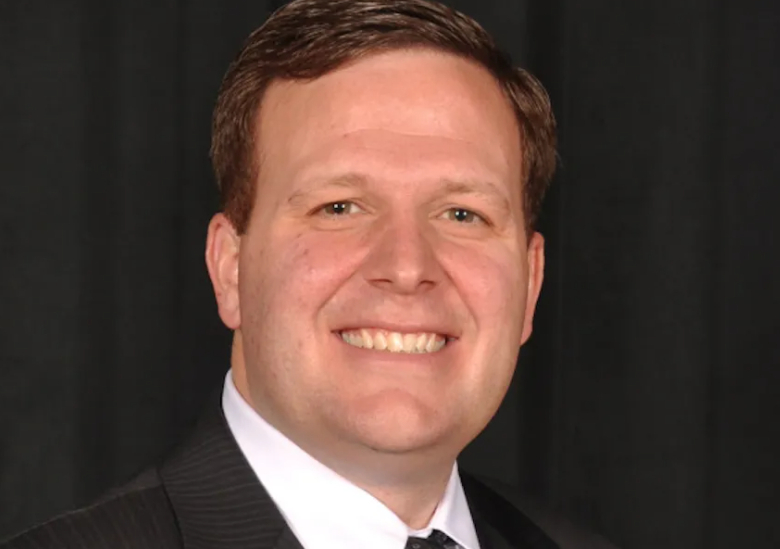
James Snyder was elected mayor of Portage, Indiana in 2011, re-elected in 2015, and indicted by a federal grand jury in November 2016 — while he was still in office. Two juries convicted him of taking a $13,000 check from the company that sold his city its garbage trucks. A federal judge sentenced him to twenty-one months in prison. He never served a day of it.
Because in June 2024 the Supreme Court of the United States took his case — Snyder v. United States — and threw the bribery conviction out, holding that the federal law he was convicted under reaches bribes, not gratuities. The case went back down. The government was allowed to try him a third time on a bribery-only theory. Instead, at the sentencing hearing on March 10, 2026, prosecutors dismissed the bribery count altogether.
What is left standing, more than nine years after the indictment, is one conviction: obstructing the Internal Revenue Service, for a shell-company scheme that hid his mortgage company’s income from the tax collectors while the company’s own payroll taxes went unpaid. For that, on March 10, 2026, Chief Judge Holly Brady put him on three years of probation and ordered $78,111.57 in restitution to the IRS (the Post-Tribune’s hearing figure; the Indiana Lawyer reports $78,116.57 — the conflict is carried at §10). He has appealed even that.
This file walks the whole record in the order it happened — the trucks, the tow list, the shell game, two trials, the sentence that never happened, and the Supreme Court case that now carries his name — from the paper: three published court decisions — the Seventh Circuit’s opinion and remand order read in full, the Supreme Court’s syllabus and opinion read firsthand — the Justice Department’s own release, and the Post-Tribune’s decade of coverage. Where the record and the headlines part company, this file follows the record.
James E. Snyder, a Republican, won the Portage mayor’s office in the 2011 election and took office in January 2012. He won again in 2015. Portage is a city of about 38,000 people in Porter County, in Indiana’s northwest corner, and Snyder ran it for seven years.
He kept a private business alongside the office: First Financial Trust Mortgage LLC, a mortgage-loan origination company he had created in 2007. The company matters to this file because the one conviction that survives against him is not about city hall at all — it is about that company’s taxes, and what he did when the IRS came to collect them (§04).
The federal investigation reached him while he governed. In September 2015 the government obtained a warrant for his personal and city email accounts; the FBI seized some 109,000 emails, and the fight over a handful of privileged ones ran all the way through his first appeal — and lost (the Seventh Circuit’s 2023 decision, §07). On November 17, 2016, a federal grand jury at Hammond indicted him on three counts: two of federal funds bribery and one of obstructing the IRS. The docket in United States v. Snyder, No. 2:16-cr-00160, had passed 660 entries by November 2025 — the November 26, 2025 order in the case is itself Document 661.
He governed under indictment for more than two years. What ended his time in office was not the charge — it was the verdict, and it ended in a single afternoon (§05).
In December 2012 and November 2013, Snyder’s administration announced that Portage would buy garbage trucks through public bidding. Both contracts went to the same Portage dealer: Great Lakes Peterbilt, owned by two brothers, Robert and Stephen Buha. The city ultimately bought five trash trucks for about $1.1 million — “contracts approved by the Portage Board of Works totaling over $1.125M,” in the words of the charge itself.
The mayor put his longtime friend Randy Reeder in charge of the bidding. Reeder testified at trial that he drafted the bid specifications to favor Great Lakes Peterbilt. The trial evidence also showed Snyder in frequent contact with the Buha brothers during the bidding — and in contact with no other bidder.
Less than three weeks after the second contract was awarded, Great Lakes Peterbilt paid James Snyder $13,000.
The charge, as the jury received it, accused Snyder of corruptly soliciting and accepting that check “intending to be influenced and rewarded” in connection with the truck contracts, under 18 U.S.C. § 666(a)(1)(B) — the federal funds bribery statute. Snyder’s answer, then and since: the money was pay for consulting work he performed for the dealership — health-insurance and information-technology consulting, he told the FBI; payroll and telephone consulting, he told Reeder — money he said he tithed on and paid taxes on. What the record also shows, and what two juries weighed: there was no written consulting contract, and no documented proof the work was ever done.
He has maintained his innocence of this charge from the first day to the last — and, in the end, the charge did not survive. How two juries convicted him of it anyway, and how the Supreme Court undid them, is §05 through §09 of this file.
The second bribery count concerned Portage’s tow list — the roster of operators the city called to haul vehicles. Prosecutors said Snyder solicited $12,000 — checks of $10,000 and $2,000 — from tow operator John Cortina of Kustom Auto Body in Portage, and from a second operator, Scott Jurgensen of Samson’s Towing, who was cooperating with the FBI and recording his conversations, in exchange for a spot on the list.
Cortina, indicted alongside the mayor, pleaded guilty in January 2019 to paying bribes to Snyder. His plea agreement states it in his own words: “At all times, I knew this $12,000 payment to Snyder was a bribe given specifically in exchange for Snyder giving me and ‘Individual A’ a part of the Portage towing.” Cortina did not testify at Snyder’s trial; he invoked the Fifth Amendment. Judge Van Bokkelen later sentenced him to one day, time served, a $12,000 fine and a $100 special assessment.
Then the jury spoke on the same money — and acquitted James Snyder of taking it. The defense had argued the $12,000 was a loan from Cortina, a friend and political supporter, toward legal fees.
This file prints both halves of that record together, because both are the record: the man who paid pleaded guilty to bribery; the mayor accused of taking it was acquitted of the charge. Snyder’s brother Jon Snyder, the Porter County Assessor, also pleaded guilty in the towing investigation’s orbit — in October 2018, to failing to supply information to the IRS — and cooperated with the FBI, including making recordings, after telling agents he had been alarmed by the alleged towing deal. That is the whole of the family’s place in this file: one plea, in the trial record, as the Post-Tribune reported it.
The tax count is older than the mayor’s office. First Financial Trust Mortgage withheld payroll and income taxes, Medicare and Social Security from its employees’ paychecks in 2007, 2008 and 2009 — and did not pay the money over to the IRS. By November 2009, prosecutors say, the IRS had discovered roughly $97,000 owed, in a period when Snyder had paid himself approximately $110,000 from the company’s account. The IRS levied the company’s bank accounts.
What happened next is the conduct the conviction rests on, in the Seventh Circuit’s words. Snyder arranged to operate his company as a division of another mortgage company, GVC Mortgage. GVC’s reimbursements for the operation were not sent to First Financial Trust Mortgage — where the IRS levy waited — but to a different company Snyder had created for the purpose: SRC Properties.
The numbers prosecutors put before the court at the final sentencing: GVC paid Snyder about $141,891.27 in wages in 2010; GVC paid SRC more than $400,000 across 2010, 2011 and 2012, billed on what prosecutors called “phony invoices” for consulting; SRC took in deposits of more than $640,000 in the same window. Their summary of the arrangement: “It was a shell game to obstruct the IRS in its tax assessment and collection obligations.”
His personal taxes ran on a parallel track. Prosecutors say he owed the IRS $31,369 for tax years 2005 through 2007 — a different measure from the $29,038 personal-tax component of the prosecution’s total loss figure below, and not a conflict with it. The IRS levied his personal bank accounts in December 2010 and February 2011. While negotiating with the IRS, he submitted three Form 433-A disclosure statements, each signed under penalty of perjury — and on all three, the Seventh Circuit found, he failed to report that he owned SRC Properties; on two, he omitted his GVC employment entirely; prosecutors say a March 2010 form claimed his debt was uncollectible and offered $1,000, without disclosing the $141,891.27 in GVC wages. Prosecutors also told the sentencing court that a company he owned lent his mayoral campaign $73,000 in 2013 — money, they said, that should have been going to the IRS.
The charged scheme ran, in the government’s memorandum, from January 2010 to April 2013. The prosecution’s total tax loss: $125,149.57 — $96,111.57 in the company’s unpaid taxes and $29,038 in his personal taxes. Snyder’s statute-of-limitations defense — that the six-year clock on the charge had run — was rejected at trial and again on appeal. A jury convicted him of obstructing the administration of the internal revenue laws, 26 U.S.C. § 7212(a), in February 2019. That conviction has never been reversed. It is the conviction he is on probation for today.
The first trial ran nineteen days in January and February 2019, before Judge Joseph Van Bokkelen in Hammond. On February 14, 2019, the jury convicted Snyder on the garbage-truck bribery count and the IRS obstruction count, and acquitted him on the towing count.
The office was gone the same afternoon. Indiana law forfeits an elected office immediately upon a felony conviction: Council President Sue Lynch took over as acting mayor that day, Portage police changed City Hall’s access codes, sheriff’s deputies inventoried his office, and his portrait came down in the lobby the next morning. A Republican caucus then installed Councilman John Cannon to finish the term; Lynch won the office outright at the next election.
Sentencing on the first verdicts never happened. On November 27, 2019, Judge Van Bokkelen denied Snyder’s motion for acquittal but granted him a new trial on the bribery count — the defense’s filings tie the ruling to a surprise, mid-trial grant of immunity to the Buha brothers that had taken the court, in the defense’s words, “completely by surprise.” The judge who inherited the case, refusing to revisit the order, put it plainly in court: “The trial was unfair, and there should be a new trial on this one charge.” The tax conviction stood.
The retrial — delayed by motions and by the pandemic, and moved to Judge Matthew F. Kennelly of Chicago, sitting by designation — ran two weeks in March 2021. The second jury convicted him of the garbage-truck count again.
On October 13, 2021, Judge Kennelly sentenced him on the two convictions together: twenty-one months in prison on each count, to run at the same time, plus one year of supervised release — well below the 46-to-57-month guideline range the government had argued for. Snyder, 43 years old, a mayor no longer, was ordered to surrender on January 5, 2022.
He never did. That is §06.
Judge Kennelly granted Snyder bond pending appeal — the January 5, 2022 surrender date was cancelled, and Snyder remained free while the Seventh Circuit considered his case. The appeal took twenty months. When it ended against him in June 2023 (§07), prosecutors moved within days to revoke his bond and put him in prison within the week.
The judge instead gave him until the fall: surrender to the Bureau of Prisons by 2 p.m. on October 16, 2023. Kennelly allowed, in the Post-Tribune’s account of the hearing, that there was the slimmest of chances Snyder could gain some relief through the appellate courts on the bribery conviction — though not, he agreed with prosecutors, on the IRS charge. “Not something the Supreme Court is likely to take up,” the judge said of the tax count.
Snyder then successfully argued that the start of his sentence should be postponed until his bid to have the Supreme Court hear his case was complete. The October date passed. The Supreme Court took the case.
So the plain fact of this file, which any honest telling has to carry: the twenty-one-month sentence was imposed in October 2021 and was never served — not a day of it. No booking photograph of James Snyder appears in the record this file is built from: he remained free on bond throughout, never surrendered, and never served a day of the sentence. The photograph at the top of this file is a published portrait, captioned as such.
United States v. Snyder, 71 F.4th 555 (7th Cir. 2023), decided June 15, 2023. Forty-two pages. The first line of the disposition is two words: “We affirm.”
Snyder had attacked everything. The warrant that seized his emails, and the government filter team that screened them for privileged material before the prosecutors saw them — a process the trial judge had said carried a “semblance of the fox guarding the hen house” — violated no right the court would recognize, because his Sixth Amendment right to counsel had not yet attached when the emails were seized before his indictment. The tax charge was not time-barred: the six-year clock required an obstructive act on or after November 17, 2010, and the government had alleged and proved such acts. The evidence on both convictions was sufficient. On the tax count, the court’s entire ruling on the point was one sentence: “Sufficient evidence supported the jury’s verdict.” What the jury had been asked to find — in the government’s argument, as the Post-Tribune reported it — was that Snyder purposefully hid assets and income from the IRS after failing to pay personal and payroll taxes in a timely fashion, by setting up a second business to funnel income without reporting it.
And on the question that would eventually undo the bribery conviction, the Seventh Circuit followed its own precedent: it held that 18 U.S.C. § 666 covers gratuities as well as bribes.
In July 2023 the full court declined to rehear the case — no active judge requested a vote. Under the ordinary course of things, the next stop was prison (§06). Snyder’s lawyers instead asked the Supreme Court to decide whether § 666 reaches gratuities at all — a question on which the federal appeals courts were split.
On June 26, 2024, the Supreme Court decided Snyder v. United States, 603 U.S. 1 (2024), six justices to three. Justice Kavanaugh wrote for the majority. The holding fits in one sentence, and it is the sentence that governs every file in this library that touches a public official and a payment:
“Section 666 proscribes bribes to state and local officials but does not make it a crime for those officials to accept gratuities for their past acts.”
The Court’s reasoning, in its own summary: the text of § 666 reads like Congress’s bribery statute for federal officials, not its gratuities statute; the history shows Congress rewrote § 666 in 1986 to track the bribery provision; and reading the law to cover gratuities would subject some 19 million state and local officials to ten years in federal prison for accepting even commonplace tokens of appreciation that their own state and local governments chose to allow. The opinion closes the point this way: “Although a gratuity or reward offered and accepted by a state or local official after the official act may be unethical or illegal under other federal, state, or local laws, the gratuity does not violate § 666.”
What the Court did to Snyder’s case is stated at the end of the opinion: “71 F. 4th 555, reversed and remanded.” His bribery conviction was reversed. The opinion did not discuss the tax count, and the tax conviction was not before the Court.
Two things this file will not do with that ruling. It will not print the wire-service shorthand that the Court “found” Snyder’s $13,000 was a gratuity: the Court decided what the statute means, as a matter of law, for every official in the country; it made no factual finding about this check. And it will not pretend the ruling declared the payment innocent: the Court’s own framing was that “the FBI and federal prosecutors suspected that the payment was a gratuity for the City’s trash truck contracts,” while “Snyder said that the payment was for his consulting services.” Bribery — an agreement made in advance — remained a federal crime the day the opinion came down, and the appeals court would soon say the evidence here could still support it (§09).
The decision reached far past Portage: prosecutions across the country, including Chicago’s, had been held waiting for it. The case that reset the federal law of gratuities carries a Portage mayor’s name.
The Supreme Court sent the case back to the Seventh Circuit, and on November 20, 2024 that court ruled on what remained. The 2021 jury instructions, it held, “allowed conviction on a theory of either bribery or gratuity” — and because the government conceded the error was not harmless, the conviction could not stand. But that was not the end of the charge: because the court found the evidence sufficient to convict on a bribery theory — “the timing and size of the payment — and the problems with the attempts by Snyder and the Buhas to explain it — all support reasonable inferences that Snyder was conscious of wrongdoing and had a corrupt state of mind” — the Double Jeopardy Clause did not bar a new trial. “The government may pursue a new trial under § 666 under a bribery-only theory.”
A third trial on the garbage-truck count was set in motion — set to begin September 15, 2025. Snyder, for his part, moved in October 2025 for leave to file a new-trial motion on the tax count as well, arguing the bribery evidence may have improperly swayed the jury that convicted him on taxes; prosecutors answered that the request was untimely and meritless. The court ruled: on November 26, 2025, Judge Gretchen S. Lund denied leave to file the proposed motion (DE 661) — untimely, the spillover argument having been available to Snyder since the 2019 trial. It was a denial of leave, not a decision on the merits: the proposed motion was never filed, and its theory was never adjudicated. Oral argument was denied as well. The denial now rides in his appeal (§11).
The third trial never happened. On May 15, 2025 — ten months before the sentencing — the government informed the court that it would not pursue the bribery count and would move to dismiss it at Snyder’s sentencing on the tax count (the disclosure is recorded in the court’s November 2025 order, DE 661, citing DE 634); the court set the case for sentencing instead. When the case finally reached that hearing on March 10, 2026, the dismissal carried out the stand-down announced the previous May — in the words of Snyder’s own counsel’s account, which the Post-Tribune’s reporting matches, the government “after considering retrial, ultimately agreed to dismiss the bribery charge at sentencing, focusing solely on the tax count.”
So the count that produced two convictions, a twenty-one-month sentence, a Seventh Circuit affirmance and a Supreme Court reversal ended not with a verdict but with the government letting it go — dismissed, more than nine years after the indictment, at the start of the last hearing in the case.
The sentencing hearing of March 10, 2026 — Snyder’s forty-eighth birthday — was held before Chief Judge Holly Brady in Hammond, in the case now captioned United States v. Snyder, No. 2:16-cr-00160-HAB-JEM. It began with the government dismissing the bribery count (§09). What remained to be sentenced was the tax conviction alone.
Prosecutors asked for twenty-one months in prison anyway, and laid the bribery facts before the judge as sentencing context, arguing the court could weigh them by a lower standard of proof. Snyder’s counsel answered that the Supreme Court’s ruling meant “the book needs to be closed on that issue.” The judge declined to make any factual findings on the dismissed charge.
Snyder addressed the court himself. He called the crime “extremely serious.” He said the nine-plus years of indictment, trials and coverage had left him “humbled.” And he said: “I just want to be done, get it right and get it behind me.”
The guideline calculation for the tax count ran above thirty-three months — 33 to 41 months on the court’s calculation as his counsel reported it (the prosecutor described the range in court as 33 to 36 months; the sentencing transcript or the court’s statement of reasons — neither yet in this file’s hands — is the record that settles the pair). The judge went below all of it. Citing, among her reasons, that Snyder had been “embroiled in this case” for nearly ten years, she imposed thirty-six months of probation — no prison, no home confinement — and ordered restitution to the IRS of $78,111.57, the amount she said he still owed, payable at $570 a month, with $18,000 already paid. (The Indiana Lawyer’s report of the same sentence puts the restitution figure at $78,116.57; this file carries the Post-Tribune’s hearing figure and flags the five-dollar conflict rather than smoothing it.) Her last recorded words to him: “I certainly trust you won’t be back in front of this court.”
That is the sentence of record today: a former mayor on federal probation for hiding his company’s money from the IRS — and, on the corruption charge that made his name a Supreme Court citation, no conviction at all.
Snyder was not done. On March 23, 2026, he appealed the tax-count judgment to the Seventh Circuit. The notice of appeal challenges the tax-count judgment — including the trial court’s denial of his motion for acquittal and its November 26, 2025 denial of leave to file the new-trial motion in the first place (DE 661). In August 2026 his attorneys filed a 111-page submission asking the appeals court to dismiss the tax case outright — arguing, among the three grounds, that the Supreme Court’s reversal of the bribery conviction, followed by the government’s dismissal of that count, should undo the tax conviction too, and alleging the tax conviction was obtained on false and misleading evidence. Those are the defense’s allegations, printed as the defense’s allegations.
Snyder appealed. The Seventh Circuit docketed No. 26-1565 on March 24, 2026. Its public register records his opening brief on August 3. We have not verified a later disposition. When the Seventh Circuit rules, this page will be updated in place, at this same address.
Two closing entries in the record, for completeness. On the state side: no Indiana criminal charge against Snyder appears anywhere in the record this file is built from, and the Supreme Court’s own opinion records the fact in a sentence — “Snyder has never been charged by state prosecutors for bribery.” And Snyder himself became a plaintiff: he sued Portage’s mayor Sue Lynch and the city attorney in federal court, alleging they coached a witness in his bribery case not to meet with him or his lawyers. That is his allegation, unproven, and the defendants moved to dismiss it; its current status does not appear in the record read for this file. Both items stand at exactly those grades, and no higher.
Every file in the Public Court Records series, in one place. Counties: St. Joseph, Elkhart, Marshall, Allen, Marion, Hamilton, Hancock, Hendricks, Johnson and Sullivan in Indiana; Berrien, Cass and St. Joseph in Michigan; Middlesex in Massachusetts; Muscatine in Iowa; Will in Illinois; St. Tammany Parish in Louisiana; Sussex in New Jersey. Every file is free, forever.
The Supreme Court decision. Snyder v. United States, 603 U.S. 1 (2024), No. 23-108, decided June 26, 2024 — syllabus and opinion read firsthand: the holding (“Section 666 proscribes bribes to state and local officials but does not make it a crime for those officials to accept gratuities for their past acts”), the 6–3 lineup (Kavanaugh, J.), the disposition (“71 F. 4th 555, reversed and remanded”), the Court’s framing of the $13,000 payment, and its record that Snyder “has never been charged by state prosecutors for bribery.” Establishes §08 and the state-side entry at §11. caselaw.findlaw.com
The first appeal. United States v. Snyder, 71 F.4th 555 (7th Cir. 2023), read in full: the garbage-truck facts (the Buha brothers, Reeder’s testimony, the $13,000 paid less than three weeks after the second award), the IRS facts (the FFTM payroll-tax failures of 2007–2009, the levies, the GVC arrangement, SRC Properties, the three Form 433-A omissions), the two-trial history, the November 27, 2019 new-trial grant, the 21-month sentence, and the affirmance. Establishes §02, §04, §05 and §07. caselaw.findlaw.com
The remand order. United States v. Snyder, No. 21-2986 (7th Cir. Nov. 20, 2024), read in full: the text of the garbage-truck count (the $13,000 check; Board of Works contracts “totaling over $1.125M”), the holding that a bribery-only retrial was permitted, and the sufficiency discussion. Establishes §02’s charge language and §09. law.justia.com
The Justice Department. U.S. Attorney’s Office release, February 2019: the first jury’s verdicts (convicted on one bribery count and the obstruction count, acquitted on the second bribery count), the exposures, and the obstruction scheme as charged against First Financial Trust Mortgage LLC. justice.gov
The hometown paper. The Post-Tribune (Merrillville), 2019–2026, its coverage read across the case’s life: the verdict week and the forfeiture of office (February 2019); John Cortina’s guilty plea and his sentence; the new-trial history and Judge Kennelly’s “the trial was unfair”; the retrial and the October 2021 sentencing; bond pending appeal and the October 16, 2023 surrender order; the Supreme Court day (June 2024) and the remand ruling (November 2024); and its contemporaneous reports of the March 10, 2026 sentencing (March 11, 2026 — the $78,111.57 restitution figure, the $570 monthly payment, the $18,000 already paid, and the quotes printed at §10) and of the March 23, 2026 appeal (March 26, 2026). Syndicated copies of the March 2026 reports were read in full where the Tribune’s own site would not load.
The final sentencing, second account. The Indiana Lawyer, March 13, 2026: the probation sentence, Chief Judge Brady, the dismissal of the bribery count on remand, the current caption (2:16-cr-00160-HAB-JEM), and its restitution figure of $78,116.57 — flagged at §10 as conflicting with the Post-Tribune’s figure, unresolved until the signed judgment is in hand.
The defense’s account. Barnes & Thornburg LLP, March 2026: the 36 months of probation with no imprisonment or home confinement, the offense-level-20 calculation (33–41 months), the government’s agreement to dismiss the bribery charge at sentencing, and the court’s refusal to make factual findings on the dismissed charge. Printed as the defense’s account wherever it is used.
The 2021 sentencing, wire account. The Associated Press, October 14, 2021: the 21 months, the year of supervised release, the below-guidelines sentence, and Snyder’s consulting-work testimony.
The photograph. A portrait of James Snyder published by the Post-Tribune with its August 2026 coverage and credited there to Snyder’s LinkedIn page — a professional portrait, not a booking photo; no booking photo appears in the record read for this file — Snyder remained free on bond throughout the case, never surrendered, and never served a day of the sentence. Face-verified November 11, 2026 against a second captioned image of the same man (Mayor Snyder delivering a keynote at the Statehouse steps, April 27, 2015, carried with the Post-Tribune’s March 2026 sentencing report): the same man, confirmed.
What is not in hand. The district-court docket itself (No. 2:16-cr-00160) could not be pulled from this desk — the public docket mirrors refused the connection — so the signed March 10, 2026 judgment and the full text of the 2019 new-trial order stand as open pulls, listed in this file’s registration record. The Seventh Circuit’s public register for the 2026 appeal (No. 26-1565) was read on its Justia docket mirror on November 12, 2026; the mirror states the docket was last retrieved on August 25, 2026, and its last entry is that day’s order setting the remaining briefing deadlines — no merits order and no mandate appear in it, and §11 claims nothing beyond it. Nothing in this file rests on a docket entry that was not read.
The rule of this file. Claims above the grade of the paper behind them are not printed. The four verbs of this record — convicted, acquitted, reversed, dismissed — are kept surgically separate, because in this case each of them is true of something, and none of them is true of everything.