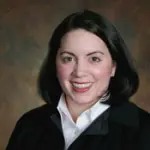
Bethany A. Cataldi is an osteopathic physician — a D.O. Her provider-directory record, which draws on the federal provider registry and state licensing data, gives her medical school as Midwestern University’s Chicago College of Osteopathic Medicine, class of 2000, and her specialty as otolaryngology — ear, nose and throat surgery — with facial plastic surgery. Her federal provider number was assigned in April 2006.
She practiced in Highland, in Lake County, at the Center for Otolaryngology and Facial Plastic Surgery, 2203 45th Street — and she was not an employee of the practice. In the Justice Department’s words, she was “a physician, and the sole owner of the Center for Otolaryngology and Facial Plastic Surgery in Highland, Indiana.” The billing that became a federal case ran through a practice that was hers alone: her name on the door, her provider number on the claims.
She lived in Chesterton, in Porter County, and she was 54 years old when she was sentenced — 53 when she was indicted. Hold the two ends of the record side by side, because the record does. The doctor whose directory profile offered her Highland practice to new patients ended as the defendant in United States v. Cataldi, No. 2:24-cr-00105, in the United States District Court for the Northern District of Indiana — convicted of billing for surgery she never performed, in a scheme the government measured in the tens of millions.
A balloon sinuplasty is a real operation. In the Justice Department’s own description, it is “a procedure designed to treat chronic sinusitis by using a small, flexible balloon catheter to widen and drain blocked sinus passages.” It is performed with a single-use balloon device: one procedure, one device, used once and thrown away. That physical fact is the whole case, because a device that is never bought cannot be used — and a procedure that uses no device did not happen.
From March 2015 through December 2023, the federal record says, Cataldi billed Medicare and private insurance companies for thousands of balloon sinuplasty procedures she did not perform. The indictment, as The Times of Northwest Indiana reported it, counted more than 1,500 claims to Medicare alone, for balloon sinuplasty and inflation devices. The National Health Care Anti-Fraud Association — the insurance industry’s anti-fraud body, which later honored the investigators on this case — puts the Medicare billings at 1,873 procedures. The counts differ by source and are printed with their sources; the order of magnitude does not differ at all.
Against those thousands stands the inventory. The indictment drew on the records of the California company that made the devices — identified in the documents only as “Company A” — and those records showed the practice had purchased approximately 100 of each device across the whole period, 2015 to 2023. Each sinuplasty device was worth $1,100; each inflation device, $75. One hundred devices in the drawer; thousands of procedures on the claims. Reporting on the indictment added that about 86 percent of the fraudulent claims happened from December 2017 on — the scheme did not wind down; it accelerated — and that at least eight patients confirmed to investigators that their operations never happened. No patient is named in this file, and none will be.
Fraud cases drown in numbers, and the numbers are not interchangeable. What she sought, what she billed, what she was paid, and what the court ordered her to repay are four different figures from four different documents. This file keeps them separate, each with its source in the same breath — because blending them is how a file like this one would start lying.
Sought: approximately $50,000,000. The Justice Department’s sentencing release: she “sought approximately $50,000,000 for these non-existent procedures.” That is the gross total of the claims as the government states it.
Billed: more than $22,000,000. Her plea agreement, as The Times reported it from the court record, admitted she fraudulently billed Medicare and six private insurance companies a total of more than $22 million for the single-use devices in the procedures she did not complete. The National Health Care Anti-Fraud Association describes the case in the same terms — a “$22 million health care fraud investigation.” Within that total, coverage of the indictment put the Medicare slice alone at $16.5 million billed (Post-Tribune, November 2024 — that article says “Medicaid” where the indictment and every later record say Medicare; the figure is carried here as the paper printed it, with the discrepancy flagged rather than silently corrected).
Paid: almost $20,000,000. The Justice Department: for the non-existent procedures “she was actually paid almost $20 million.” The Post-Tribune’s indictment coverage put the Medicare reimbursements at $9 million of that. And some of the money came directly from the people in her waiting room: the Justice Department puts the patients’ own co-insurance payments at approximately $460,000, while the plea agreement, as The Times reported it, put the patient co-pays taken through private insurance at more than $550,000. Two documents, two figures, printed side by side — they are not added together, and neither is rounded into the other.
Ordered repaid: $19,138,245.43. One figure in this file is stated as the court’s order, and it is this one: the Justice Department states she was “ordered to pay $19,138,245.43 in restitution.” A second figure stands in the record beside it, and it is not a second court order. The Times, reporting from the sentencing hearing, reported that she “has agreed to pay the full $22 million in restitution” — the restitution figure her plea agreement carried, owed to Medicare, the private insurers, and the patients who lost money. Whether the judgment’s order matches the plea’s figure is a question the signed judgment answers, and the judgment is listed in §08 as this file’s first outstanding pull. Until it is in hand, both figures stand, each in its own category.
Forfeiture ran alongside the restitution. Under her plea agreement, the Justice Department states, she was required to forfeit significant assets — jewelry, vehicles, musical instruments, and the contents of a number of bank accounts — and agreed to sell real estate and other luxury assets bought with the proceeds. At the sentencing hearing, her own attorney told the court approximately $3 million had already been forfeited, through hundreds of thousands of dollars in jewelry and a multi-million-dollar property in Chicago (The Times). Beyond that statement in court, no record in this file’s hands shows how much has been collected, and this file does not guess.
The scheme did not end because the practice was audited by its own. It ended, according to the National Health Care Anti-Fraud Association’s account of the case, when the U.S. Department of Health and Human Services Office of Inspector General identified suspicious billing patterns — and then did the simplest thing in the file: agents interviewed the Medicare beneficiaries in whose names the procedures had been billed, and many of them confirmed they never received the billed procedures. The patients’ own answers were the first paper in the case.
The investigation ran four years and crossed the whole health-care system she had billed: the HHS Inspector General and the Federal Bureau of Investigation, with assistance from the Food and Drug Administration’s Office of Criminal Investigations (Justice Department), the U.S. Attorney’s Office for the Northern District of Indiana, and — on the private side of the ledger — the six major private health insurers she had billed alongside Medicare (NHCAA). Assistant United States Attorney Francis Sohn prosecuted the case.
The work was recognized inside the profession that does it. On November 20, 2025, the National Health Care Anti-Fraud Association named the investigation and prosecution teams in United States of America v. Bethany A. Cataldi for its Investigation of the Year — Honorable Mention. The association’s summary of the case it honored is one of this file’s sources: it is where the count of 1,873 procedures billed to Medicare against devices enough for approximately 100 is stated most plainly.
The HHS Inspector General’s Special Agent in Charge, Mario M. Pinto, said at the sentencing, in the Justice Department’s release: “Billing for thousands of procedures that were never performed is a profound breach of the trust placed in medical professionals. This scheme siphoned millions of dollars from Medicare and private insurers and even targeted individual patients for payment.”
On November 20, 2024, a federal grand jury in the Northern District of Indiana indicted Bethany Cataldi on three counts. In the indictment’s own charge language, as the Post-Tribune reported it at the time: health care fraud; knowingly and willfully making false, fictitious and fraudulent statements; and knowingly engaging and attempting to engage in monetary transactions — the money-laundering count, in The Times’ shorter description. The charging papers covered the same window as everything else in this file: March 2015 to December 2023. A trial date was set for January. She pleaded not guilty.
She did not go to trial. Her plea agreement was filed June 20, 2025 (The Times, from the federal court records). In it, she admitted that she had fraudulently billed Medicare and six private insurance companies more than $22 million for single-use devices used in nasal procedures she did not complete. The agreement ordered restitution of the $22 million — payable to Medicare, to the private insurance companies, and to her patients who sustained financial losses — even though, as The Times noted from the agreement, she had not been directly indicted for the conduct that caused the losses to the private companies and her patients. Under the agreement, the additional charges against her were to be dismissed following her sentencing. She faced a maximum of ten years in prison.
She pleaded guilty to one count of health care fraud. Her plea agreement was filed on June 20, 2025, and Judge Lund accepted the plea at a hearing the following month — The Times’ plea coverage, written from the court record, dates the filing to June 20 and the acceptance to a Thursday hearing in July, and the Post-Tribune’s sentencing coverage states she ‘pleaded guilty in July.’ The anti-fraud association’s summary and The Times’ later sentencing story both say June; the docket entry that pins the exact day is listed in §08. Sentencing was first set for October 30, 2025; it was held the following February. What she admitted by pleading is printed in this file as what she admitted. The remaining counts were never tried, and their dismissal is printed the way the plea agreement provided for it — the signed judgment and the docket entries themselves are listed among this file’s open records in §08.
On February 18, 2026, in Hammond, United States District Judge Gretchen S. Lund sentenced Bethany Cataldi to 97 months in federal prison — eight years and one month — followed by one year of supervised release, and ordered restitution of $19,138,245.43 (Justice Department; The Times’ account of the same hearing reports the restitution as the agreed $22 million, and the conflict is carried in §03 and §08, not resolved here). The hearing ran about ninety minutes. Dozens of her former patients had written to the court; this file records that they wrote, and nothing of what any of them said.
The judge’s words, as The Times recorded them from the bench: “Both patients and third-party medical insurers trust that doctors will tell them the truth and do no harm.” And then: “Ms. Cataldi violated that trust.” When her attorney described the fraud as an “event,” Judge Lund corrected him: “This isn’t a criminal event … this happened over a period of eight years.” The defense argued that her former spouse had been involved in submitting the fraudulent claims and that the loss figure overstated her role — he is not named in this file; he was not charged — and the judge answered the heart of it on the record: any argument that Cataldi did not fully understand the fraud being committed “defies logic and my own common sense.” Her closing assessment was the sentence’s epitaph: “Her actions diminish public trust and confidence in the health care system.”
For the government, Assistant United States Attorney Francis Sohn called her crimes “thorough and indiscriminate” — a fraud, he argued, committed to maintain a lifestyle of luxury cars, expensive property, designer clothing and lavish jewelry (The Times). Cataldi addressed the court herself and apologized to her patients, her colleagues, the insurers, her family and the government: “I am deeply remorseful for the pain my actions have caused my victims,” she said, as The Times recorded it.
The United States Attorney for the Northern District of Indiana, Adam L. Mildred, stated the case’s principle in the Justice Department’s release: “Doctors who sign up with Medicare and private insurance companies are in a position of trust. Bethany Cataldi abused that trust – as well as the trust of her patients, many of whom were senior citizens – by filing fraudulent claims. This sentence reflects that doctors who engage in such outrageous behavior will face significant consequences in this District.”
A physician’s license is a state document, and Cataldi’s was Indiana’s: her federal provider-registry record carries an Indiana physician license number, and her degree and practice stand in §01. What the State of Indiana has done about that license since her indictment is, on the record this file could reach, an open question — and this section prints it as exactly that, in both directions.
The searches behind this file — the Medical Licensing Board of Indiana’s published minutes and agendas, and the open web — located no board action against her license: no suspension, no revocation, no agreed order found. That is a statement about the searches, printed with their scope, not a claim that the license stands clean or that none exists. The direct pull — the Indiana Professional Licensing Agency’s license record — remains open and is named in §08. A file that prints what the paper shows also prints where it stopped looking.
The Post-Tribune reported at her sentencing that state records show her medical license is expired — a lapse, on the record in hand, not a board order. The direct Professional Licensing Agency pull remains the confirming record and stays open in §08.
Illinois paper exists, and it is not silent. Cataldi also held an Illinois physician and surgeon license, credential 036108350. The Illinois Department of Financial and Professional Regulation’s May 2026 Enforcement Actions report, in its Medical section, lists Bethany Cataldi of Schererville, Indiana, and records her “physician and surgeon license indefinitely suspended” — the action attributed to her federal health-care-fraud conviction. That is a dated licensing order from the state next door, read from the agency’s own report: where Indiana’s record, on the searches above, shows nothing, Illinois’s shows a suspension.
The federal consequence is not discretionary in the same way. Federal law requires the HHS Inspector General to exclude a person convicted of health care fraud from participation in Medicare and Medicaid. Her individual listing in the Inspector General’s exclusion database was not pulled for this build; it is an open record, and when it is in hand it will be added here. What can be said without it is the arithmetic of the sentence itself: a doctor who cannot bill Medicare or Medicaid, and who is serving 97 months, is not practicing medicine.
One directory artifact deserves a line of its own, because it shows how slowly the paper world catches up with the court record. Her WebMD provider profile — the page that carries her portrait at the head of this file — was still presenting her Highland practice as accepting new patients when this file read it on November 11, 2026: nine months after her sentencing, two years after her indictment. The profile draws on registry and licensing data and was never updated to meet the judgment. The court record is the record. The directory is not.
An honest file lists its own gaps. These are this file’s, printed as open items — not as absences, and not as clearance.
The docket and the signed judgment. This file is built on the Justice Department’s sentencing release and the HHS Inspector General’s enforcement record of it — primary government documents, read in full — on the anti-fraud association’s case summary written with the investigative teams, and on named reporting by The Times of Northwest Indiana and the Post-Tribune. The district court’s docket and signed judgment in United States v. Cataldi, No. 2:24-cr-00105 (N.D. Ind.) — the number carried here on the strength of the published case citation in JD Supra’s investigations newsletter and the docket’s legal-press indexing — were not themselves pulled for this build: the public docket mirror required credentials this build does not hold, and no PACER pull was made. The judgment is the first outstanding record, for three named reasons: it reconciles the restitution conflict in §03 ($19,138,245.43 as the Department states the order; $22 million as the plea agreement and the hearing coverage carry it); it pins the exact date of the plea hearing, which the coverage in hand dates to July 2025 without the day; and it carries the dismissal entries for the counts the plea agreement resolved. The conviction, the plea, and the sentence do not depend on that pull — but when the judgment is in hand, it will be added to this file at this same address.
Whether the restitution has been paid. The only collection figure in hand is the one her attorney stated in open court — approximately $3 million already forfeited (The Times). No record here shows what has been collected since, and this file does not guess in either direction.
Her medical license. No Indiana Medical Licensing Board action was located in the searches described in §07, and this file makes no claim about her Indiana license in either direction. The Post-Tribune reported at her sentencing that state records show her license is expired — a lapse, on the record in hand, not a board order. The Professional Licensing Agency lookup, and her listing in the HHS Inspector General’s exclusion database, remain open pulls.
Where she is now. No Bureau of Prisons record was pulled for this build. The public record this file rests on ends at the sentence: it does not state where she is serving the 97 months, and this file computes no release date and prints no address or present circumstance for her — because the paper in hand does not carry them, and a file about a paper trail does not invent one.
Civil claims. An Indianapolis plaintiffs’ firm states publicly that it is investigating potential claims by former patients. That is a law firm’s solicitation, not a filed case; no civil filing is in this file’s record, and no patient is identified anywhere in this file.
Bethany A. Cataldi was an ear, nose and throat doctor in Highland, Indiana — the sole owner of the Center for Otolaryngology and Facial Plastic Surgery, a practice she built on 45th Street in Lake County. For almost nine years, according to the federal record, a large part of what that practice billed for never happened at all.
On February 18, 2026, a federal judge sentenced her to 97 months in federal prison for health care fraud. The Justice Department’s account of the case: she billed Medicare and private insurance for thousands of balloon sinuplasty procedures she did not perform — she sought approximately $50 million for the non-existent procedures and was actually paid almost $20 million. About $460,000 of it, the Department adds, came out of her own patients’ pockets as co-insurance payments. She had pleaded guilty to one count of health care fraud.
The court ordered restitution, and this file prints the restitution the way the record gives it — in two figures that do not match, each with its document attached. The Justice Department states the ordered restitution as $19,138,245.43. The Times of Northwest Indiana, reporting from the sentencing hearing, reported that she agreed to pay the full $22 million — the figure her plea agreement carried. Both stand in this file, unsmoothed, because the signed judgment that reconciles them is a document this file has not yet pulled, and a file about a paper trail does not blend numbers to make them agree.
The spine of the story is the count underneath the money. A balloon sinuplasty consumes a single-use balloon device. The records of the device maker, as the indictment laid them out, show her practice bought about one hundred of the devices. The billings ran into the thousands. The judge who sentenced her said the quiet part in open court, as The Times recorded it: “Both patients and third-party medical insurers trust that doctors will tell them the truth and do no harm.” Then: “Ms. Cataldi violated that trust.”
Every file in the Public Court Records series, in one place. Counties: St. Joseph, Elkhart, Marshall and Allen in Indiana; Berrien and Cass in Michigan; Middlesex in Massachusetts; Sussex in New Jersey. Every file is free, forever.
Every material claim in this file traces to a record below. Anything named in this file but not registered here stands in the file as reporting until the paper itself is in hand. Last checked November 11, 2026.
“Highland Physician Sentenced to 97 Months in Prison” — read in full for this build. Sole owner of the Center for Otolaryngology and Facial Plastic Surgery, Highland; billed Medicare and private insurance for thousands of balloon sinuplasty procedures she did not perform; sought approximately $50,000,000; paid almost $20 million; approximately $460,000 paid by individual patients as co-insurance; 97 months, one year of supervised release, $19,138,245.43 restitution; forfeiture of jewelry, vehicles, musical instruments and bank-account contents under the plea agreement, with real estate and luxury assets to be sold; statements of U.S. Attorney Adam L. Mildred, HHS-OIG Special Agent in Charge Mario M. Pinto, and FBI Special Agent in Charge Timothy J. O’Malley, verbatim; investigation by HHS-OIG and the FBI with FDA Office of Criminal Investigations assistance; prosecution by AUSA Francis Sohn. The HHS Office of Inspector General’s enforcement page carries the identical release, dated February 18, 2026. NOTE: the release renders the Bureau’s name as “Federal Bureau of Investigations”; this file prints it correctly. Named in: Intro, §01, §02, §03, §04, §06.
The association’s published summary of United States of America v. Bethany A. Cataldi, honoring the investigation and prosecution teams (Honorable Mention): the case originated when HHS-OIG identified suspicious billing patterns and interviewed Medicare beneficiaries, many of whom confirmed they never received the billed procedures; 1,873 procedures billed to Medicare, March 2015–December 2023, against devices enough for approximately 100; four-year investigation joining HHS-OIG, the FBI, the FDA, the U.S. Attorney’s Office and six major private health insurers; the case framed as a $22 million fraud; “In June 2025, Dr. Cataldi pleaded guilty to health care fraud.” Written before sentencing (it anticipated an October 2025 sentencing date, which moved). Named in: §02, §03, §04, §05.
“Highland doctor pleads guilty to federal charge of health care fraud” — the plea agreement filed June 20, 2025; her admission that she fraudulently billed Medicare and six private insurance companies more than $22 million for single-use devices in procedures she did not complete; the agreement’s $22 million restitution term, reaching Medicare, the private insurers and her patients, including conduct she was not directly indicted for; additional charges to be dismissed following sentencing; sentencing first set for October 30, 2025; maximum exposure ten years; the indictment’s charges and its more-than-1,500 Medicare claims. Read in full for this build. Named in: §03, §05.
“Region doctor’s fraud ‘diminishes public trust and confidence in health care system,’ judge says” — read in full for this build. The ninety-minute hearing; Judge Lund’s statements verbatim, including the trust passage, the “criminal event” correction, and the “defies logic” answer; AUSA Sohn’s “thorough and indiscriminate” argument and the lifestyle he described; the defense’s argument concerning her former spouse (unnamed there, unnamed here, uncharged); her apology; the former patients’ letters (their existence recorded; no content carried in this file); the indictment’s device records (“Company A”: approximately 100 of each device purchased, 2015–2023; sinuplasty device $1,100, inflation device $75); more than $550,000 in patient co-pays “according to the plea”; and the restitution as agreed at $22 million with approximately $3 million already forfeited, the forfeiture figure stated in court by defense attorney Jonathan Meltz. NOTE: this coverage renders the year after prison as “one year on probation” — a reporter’s shorthand; a federal judgment imposes supervised release, and the Justice Department’s term is what this file prints. Its statement that she “pleaded guilty to a charge of health care fraud in June” is the June dating §05 weighs against The Times’ own plea coverage and does not follow. Named in: Intro, §02, §03, §05, §06.
“Feds: Doctor bilked $9M from Medicare” — the November 20, 2024 indictment in three counts, in the charges’ own language (health care fraud; false, fictitious and fraudulent statements; monetary transactions); her not-guilty plea; the practice’s billing put at $16.5 million with $9 million reimbursed for over 1,800 balloon sinuplasty procedures; about 86 percent of the fraudulent claims from December 2017 on; at least eight patients confirmed to investigators their operations never happened. NOTE: the article as published says the practice “billed Medicaid” where the indictment and every later record in the case say Medicare; the figures are carried in §03 with the discrepancy flagged, not silently corrected. Named in: §02, §03, §05.
A law-firm newsletter’s summary of the sentencing, which states the citation this file prints: “The case is United States v. Cataldi, No. 2:24-cr-00105 (N.D. Ind.),” and the restitution as “over $19 million,” consistent with the Justice Department’s figure. The docket itself was not pulled for this build (see the RECORDS STATUS card). Named in: §01, §08.
Her WebMD profile (MDx Vitals network), read in full for this build: otolaryngology–head and neck surgery; Center for Otolaryngology, 2203 45th Street, Suite B, Highland, Indiana; medical school Midwestern University–Chicago College of Osteopathic Medicine, 2000; the profile states it is based on verified provider data drawn from the provider registry and state licensing boards — and still presented the practice as accepting new patients when read on November 11, 2026. The federal registry record (NPI 1205890886, as republished from NPPES data) carries the Highland practice address, the facial-plastic-surgery taxonomy, an Indiana license-number field, and an April 12, 2006 enumeration date. Directory data is used in this file only for the practice facts in §01 and the observation in §07, and is attributed as directory data wherever it appears. Named in: §01, §07.
Provider-directory portrait: the headshot carried on Bethany Cataldi’s WebMD provider profile (MDx Vitals network), on the profile that ties the image to her name, her Highland practice and her provider number. No booking photo was released in this case, and no news photograph of her was reachable in the record behind this file; generic image-search results under her name returned other women and were discarded unverified. The publisher’s file is small — 150×150 — and is staged byte-true (format-converted without alteration) and captioned on the home view as what it is: a directory portrait, carried at the size the record gives. Home view.
The N.D. Ind. docket and signed judgment in United States v. Cataldi, No. 2:24-cr-00105, were not pulled for this build (the public docket mirror’s API required credentials; no PACER pull made) — the judgment is the first outstanding pull, and §08 names what it settles. The Indiana Professional Licensing Agency license record, her HHS-OIG exclusion listing, and a Bureau of Prisons custody record were likewise not pulled; no Medical Licensing Board of Indiana action was located in the searches behind this file, and no claim about her Indiana license is made in either direction. Named in: §07, §08.