Kyle Cox coached Park Tudor’s boys to two straight Class 2A state basketball championships, in 2014 and 2015. He taught chemistry. He sat in the athletic department’s leadership as an assistant athletic director. In February 2016 the FBI arrested him at his Fishers home, and in July 2016 a federal judge sent him to prison for fourteen years for coercing and enticing a student at his own school.
That is the crime, and this file carries it in the charge’s own words. But the crime is only half of this file. The other half is what the institution did in the week after a father walked in with the evidence: the school fired the coach and papered his exit with a confidentiality agreement the same day; it sent the state a child-abuse report that left out the existence of the explicit images and videos it had been handed; its head of school was in the room when that report was made and did not correct it, and then made false statements to a detective about what he knew. The school admitted all of that, in writing, in a federal deferred prosecution agreement that put a retired Seventh Circuit judge over it as a compliance monitor. Its outside lawyer was later publicly reprimanded by the Indiana Supreme Court for seeking, in the court’s words, to silence the student and frustrate law enforcement. And the head of school was dead by his own hand before any of it became public.
Then the last turn: Cox was supposed to be in federal prison until August 2027. In May 2025 the Bureau of Prisons moved him out of FCI Milan into community confinement under its Detroit reentry office — a little over two years ahead of that date, on earned-time credits under the First Step Act. He remains in federal custody in that confinement; the fifteen years of supervised release begin when the custody ends. The federal registry lists an address for him in Henry County, the county he grew up in.
This file is built from the paper: the federal complaint, the Justice Department’s sentencing release, the published detention ruling in his case, the school’s own deferred prosecution agreement, the Indiana Supreme Court’s disciplinary opinion, and the contemporaneous reporting of the Indianapolis Business Journal, the Indianapolis Star and The Indiana Lawyer. Every claim stands at the grade its evidence earns, and §08 lists every pull still outstanding — including the criminal case number, which this file prints as an open pull rather than a guess.
One rule governs every line: the student is a student — never named, never aged, never described, never placed — in this file, and no detail of any message or image appears beyond the charges’ own words. The subjects of this file are the coach, the sentence, the school’s admitted cover-up, and the move into community confinement.
Kyle Cox came from Henry County. At Blue River High School he was a basketball standout; at Ball State University he played golf and basketball. In 2009, Park Tudor School — the private school on Indianapolis’s north side — hired him as an assistant basketball coach and assistant athletic director. He rose to head coach of the boys varsity team and to the chemistry classroom.
The coaching record is the reason this case landed the way it did. Park Tudor won the Class 2A state championship in 2014 and again in 2015 with Cox on the bench — back-to-back titles at one of the most visible private schools in the state. He was, by every account in the record, a rising figure: a championship coach, a faculty member, an administrator, all three at once.
He also taught the student at the center of the federal case. The Justice Department’s sentencing release puts it in one line: Cox “was a teacher of” the student “beginning in the fall of 2015.” What he did with that position is §02 — told, as this whole file is told, from the paper: the federal criminal complaint filed against him, and the plea record on which he was convicted.
From September through December 2015, according to the federal criminal complaint and the record of his guilty plea, Cox exchanged sexually explicit messages with a student at his school and worked to arrange for the student to come to his home in Fishers for sexual activity while his family was away. The meeting never took place. This file prints the conduct in the charge’s terms and stops there: the charge is coercion and enticement of a minor, 18 U.S.C. § 2422(b), and the messages’ contents belong to the sealed work of the case, not to this page.
What broke it open was a father. On December 13 and 14, 2015, the student’s father discovered the communications and did what the system asks a parent to do: he took the evidence — a laptop and printouts — to the school. On December 14 he sat down with Park Tudor’s head of school, Matthew Miller, and the school’s outside counsel, and showed them what he had.
By then Cox knew. The Justice Department’s account of the admitted conduct records that on December 15, 2015, once Cox realized his behavior had come to light, he tried to persuade the student to lie about their communications — in the Department’s words, so that he could avoid criminal responsibility for his actions, imploring the student to make sure that he didn’t go to jail. The persuasion failed. What happened next was not the police arriving. It was the school, deciding what to do with what it had been handed — and that is §03.
Everything in this section comes from the school’s own admissions. On November 15, 2016, Park Tudor School entered a federal deferred prosecution agreement admitting the facts below; where this file describes the school’s conduct, it is quoting the facts the school admitted in that agreement, not an accusation.
December 15, 2015. One day after the father’s meeting, Miller fired Cox — and Cox resigned the same day, signing a confidentiality agreement that barred him from discussing the reasons for his departure. The school’s statement to its families said the coach had tendered his resignation, and nothing more. The complaint records that Cox was allowed to take a school computer home that day.
The report. Indiana law required a report to the Department of Child Services. The school made one on December 15 — and the report omitted the existence of the explicit images and videos the school had received from the father. The DPA admits the report was materially false: Miller directed another employee to make it without giving her the complete information; Miller was present when the erroneous report was made and did not correct it; and Miller afterward made false and misleading statements to a police detective, failing to disclose that he had been present and had firsthand knowledge of the evidence. The school’s outside counsel, Ice Miller partner Michael Blickman, had taken possession of the father’s evidence at the December 14 meeting; the authorities did not have it until the warrants came, three weeks later (§04). The DPA states there is no known evidence that any other Park Tudor employee knew of the evidence’s existence.
January 23, 2016. About three weeks after the search warrants were executed, and before the allegations became public, Matthew Miller died by suicide. This file records the fact and the date, from the reporting and the court record, and nothing more — no source in the paper states why, and this file does not guess.
On January 7, 2016, investigators served search warrants at Park Tudor School, at Cox’s Fishers home, and on Cox himself (Marion County Superior Court, Criminal Division Room 4). That is the day the evidence moved: what the school and its lawyer had held since December 14 was now in the hands of the Marion County Prosecutor’s Office, the FBI and the Indianapolis Metropolitan Police Department — the agencies the Justice Department credits with the investigation.
On February 4, 2016, the federal criminal complaint was filed — Case No. 1:16-mj-0096, U.S. District Court for the Southern District of Indiana — charging Cox with coercion and enticement of a minor, 18 U.S.C. § 2422(b). FBI agents and the Indiana Internet Crimes Against Children Task Force arrested him at his Fishers home the same day. The complaint, some thirty pages, laid out not only the case against Cox but the school’s and its attorney’s handling of the evidence — the first public word of any of it.
The government kept that second thread open in public. The next day, U.S. Attorney’s Office spokesman Tim Horty said of possible charges against the school or its counsel: “Everything is still on the table. The investigation is not complete.” Cox, meanwhile, was in the custody of the U.S. Marshals, and his first fight was over whether he would wait for trial in a cell or under lock and key somewhere else. That fight produced a published ruling — §05.
The detention fight. At a detention hearing on February 8, 2016, a magistrate judge ordered Cox released on strict conditions — home detention and GPS monitoring among them — finding he had rebutted the presumption that no conditions could keep the community safe. The government moved to revoke the release and detain him. Reviewing the matter anew, Judge William T. Lawrence denied the government’s motion but tightened the conditions past the magistrate’s: 24-hour lockdown at a monitored facility — the Volunteers of America-Indiana community corrections facility in downtown Indianapolis — with no internet access and no contact with minors or witnesses. The court found the evidence troubling but not clear and convincing proof of a danger the conditions could not control, and noted Cox had no criminal history. He was still on that lockdown in May, when the case ended the way it ended. The ruling stands in the published record of his case as United States v. Cox (S.D. Ind. 2016).
The plea. Cox waived indictment — the case proceeded on the government’s information rather than a grand jury’s charge — and on May 10, 2016, before Senior Judge Larry J. McKinney, he pleaded guilty to one count of coercion and enticement of a minor. The plea agreement fenced the sentencing fight: Cox would not ask for fewer than 10 years; the government would not ask for more than 14; the statute allowed anything from 10 years to life. In court he appeared in a black suit, answered “yes, sir” to the judge’s questions, and his parents watched from the gallery, as the Indianapolis Star reported from the room.
A note on the case number. The complaint’s number — 1:16-mj-0096 — is verified and printed in §04. The criminal case opened on the information carries its own docket number; it appears in none of the releases, coverage or published rulings this file rests on, and this file does not guess it. It is registered as an open pull in §08, to be closed from PACER the day the court-records account for it activates.
On July 29, 2016, Judge McKinney imposed the sentence, and the United States Attorney announced it the same day. The Justice Department’s release states it in the government’s own terms: “Kyle M. Cox, 31, Fishers, was sentenced to 168 months (14 years) imprisonment by U.S. District Judge Larry J. McKinney” for coercion and enticement of a minor to engage in illegal sexual activity.
Fourteen years was the top of the plea agreement’s range — the number the government asked for. The defense had asked for the bottom, ten years. The judge took the government’s side of the fence the parties had built. Behind the prison term stood the second half of the sentence: fifteen years of supervised release to follow it, as Assistant U.S. Attorneys Steven D. DeBrota and Kristina M. Korobov stated for the prosecution. Cox was remanded to the custody of the U.S. Marshals Service to begin serving the term in the Bureau of Prisons.
He served it principally at FCI Milan, in Michigan. On the arithmetic of the judgment, his expected release date stood at August 11, 2027. What actually happened to that date is §08. First, the reckoning that was still owed by the adults around him — the school’s own case, and its lawyer’s — in §07.
The deferred prosecution. On November 15, 2016, the United States Attorney announced that Park Tudor School had entered a deferred prosecution agreement, running through March 15, 2018. In it, the school admitted that its head of school’s conduct had exposed it to prosecution for misprision of a felony, 18 U.S.C. § 4 — the concealment of a known felony — for the delayed and false reporting admitted in §03. Prosecution was deferred on conditions, and an independent compliance monitor was put over the school: retired Seventh Circuit Judge John Tinder. The agreement records that the school had fully cooperated with investigators since February 5, 2016 — the day after Cox’s arrest — and U.S. Attorney Josh Minkler marked the turn: “After Kyle Cox was arrested, Park Tudor certainly turned around and took a 180-degree different approach and was completely cooperative.” On compliance, the deferred prosecution was never converted into a charge.
The lawyer. The school’s outside counsel had his own reckoning, four years later. On December 9, 2020, the Indiana Supreme Court publicly reprimanded Ice Miller partner Michael A. Blickman (In the Matter of Michael A. Blickman, Case No. 18S-DI-553). The court found that Blickman — who had taken possession of the father’s evidence at the December 14, 2015 meeting and made copies of material that included depictions of a minor, while the state report waited a day and then went in without the material facts — “sought to silence [the student] and frustrate law enforcement.” A public reprimand is the Supreme Court’s published discipline on a lawyer’s record; it is the ending the paper gives the man the school sent to the meeting.
The civil case. The family’s civil claims against Park Tudor and Ice Miller were settled in 2017; the terms are not public, and this file prints nothing about them beyond the fact and the year. With that, every case this scandal opened had closed — except the longest one, still running on a prison clock in Michigan.
Into community confinement, two years early. The Indianapolis Star reported in January 2026 that on May 14, 2025, Cox moved out of FCI Milan to community confinement under the Detroit reentry office — roughly two years ahead of the August 11, 2027 release date his sentence had projected — on 756 days of earned-time credits under the First Step Act. This file prints those mechanics as the Star’s reporting, attributed, because no Bureau of Prisons record in hand confirms them; the first audit pass will pull the Bureau’s own record (pull KC-03, below). What is not in doubt is the shape of what remains: the fifteen years of supervised release from his 2016 sentence begin when that custody ends, under the U.S. Probation Office in Indianapolis at that time, and he is carried on Indiana’s sex offender registry, listing an address in Henry County — the county of Blue River High School, where the coach’s own story started (§01). This file publishes the county and nothing finer; his street address is the registry’s business, not this page’s.
The license. No action by the Indiana Department of Education against Cox’s educator license appears in the reachable record, and the Department’s license file is an interactive lookup this build could not operate. This file therefore claims nothing about the license — neither that it was revoked nor that it stands — and leaves the question standing here, as pull KC-02, until the record itself is read.
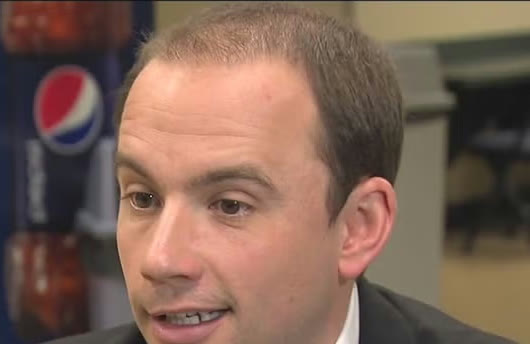
The photograph. The lead photograph is a news-interview frame published by WRTV (RTV6) with its February 4, 2016 arrest coverage — the face the station put on this story the day he was arrested, cropped here to the man alone, without the broadcast graphics. It is a 2016 photograph, printed because it is the verified likeness in hand; it is not a booking photograph — none was located in the reachable record — and it is not a current image. Its verification chain is set out in the Sources view, and the launch-gate check against FOX59’s captioned photograph from the same day’s coverage is registered below as pull KC-PHOTO.
Open pulls registered on this file:
• KC-01 — the federal criminal case number for United States v. Kyle M. Cox (S.D. Ind.), from PACER when the account’s mailed authentication activates; the complaint number (1:16-mj-0096) stands in §04 meanwhile, labeled as what it is.
• KC-02 — the IDOE educator-license record (see above).
• KC-03 — the Bureau of Prisons inmate record and the Indiana registry entry, confirming the release posture of record.
• KC-PHOTO — the launch-gate side-by-side of the lead photograph against FOX59’s February 4, 2016 arrest-article image captioned “Kyle Cox” (archived September 14, 2020), through the live-browser route; the file’s alternate photo leads, if that check ever failed, are WTHR’s archived July 2016 sentencing coverage and the January 2026 release coverage.
Every file in the Public Court Records series, in one place. Counties: St. Joseph, Elkhart, Marshall, Allen, Marion, Hamilton, Hancock, Hendricks, Johnson and Sullivan in Indiana; Berrien, Cass and St. Joseph in Michigan; Middlesex in Massachusetts; Muscatine in Iowa; Will in Illinois; St. Tammany Parish in Louisiana; Sussex in New Jersey. Every file is free, forever.
Every material claim in this file traces to a record below. Anything named in this file but not registered here stands in the file as reporting until the paper itself is in hand. Last checked November 11–12, 2026.
The government’s own announcement of the sentence: Kyle M. Cox, 31, of Fishers, sentenced to 168 months by U.S. District Judge Larry J. McKinney for coercion and enticement of a minor; the admitted conduct of September–December 2015, including the December 15, 2015 attempt to persuade the student to lie, in the release’s words; the fifteen years of supervised release (per AUSAs Steven D. DeBrota and Kristina M. Korobov); the investigating agencies — the Marion County Prosecutor’s Office, the FBI and IMPD; and the remand to the U.S. Marshals. Named in: Intro, §02, §06.
The thirty-page complaint: the charge under 18 U.S.C. § 2422(b); the September–December 2015 communications in charge-level terms; the father’s December 13–14, 2015 presentation of the evidence; the December 15 resignation and confidentiality agreement, and the school computer taken home; the January 7, 2016 warrants at the school, the Fishers home and Cox’s person; and the complaint’s account of the school’s and its attorney’s handling of the evidence. Where the school’s later deferred prosecution agreement admits the same facts, the agreement — not the complaint — is this file’s source, and the file says so. Named in: §02, §03, §04.
A name note: the agreement and the federal complaint style him Kyle Edward Cox; the Justice Department’s sentencing release styles him Kyle M. Cox. This file uses Kyle Cox. The school’s signed admissions: the December 15, 2015 report to the Department of Child Services omitted the explicit images and videos and was materially false; the head of school directed the employee who made it, was present, and did not correct it; his false and misleading statements to a detective; the exposure to prosecution for misprision of a felony, 18 U.S.C. § 4; the independent compliance monitor, retired Seventh Circuit Judge John Tinder; the term through March 15, 2018; the school’s full cooperation from February 5, 2016; and the statement that no other employee is known to have known of the evidence. Named in: Intro, §03, §07.
The February 8, 2016 detention hearing and the magistrate’s release order (home detention, GPS); the government’s motion to revoke; the district court’s denial of revocation on de novo review and its stricter conditions — 24-hour lockdown at a monitored facility, no internet, no contact with minors or witnesses — and its findings on danger and criminal history. Corroborated in every material particular by the Indianapolis Business Journal’s contemporaneous reporting, including the Volunteers of America-Indiana facility and the lockdown’s continuance into May 2016. Named in: §05.
The public reprimand of Park Tudor’s outside counsel, and the court’s finding — quoted in §07 in the opinion’s words as carried in the record — that he sought to silence the student and frustrate law enforcement, on the December 2015 facts: possession of the father’s evidence, copies made of material including depictions of a minor, and the delayed, incomplete report to the state. Named in: Intro, §07.
The arrest and the complaint’s account of the school’s handling (February 5, 2016), including USAO spokesman Tim Horty’s “Everything is still on the table”; the school’s retention of independent counsel (February 14, 2016); the plea agreement’s 10-to-14-year frame and the Volunteers of America lockdown (May 5, 2016); the plea hearing and the sentencing setting (May 10, 2016); the sentence (July 29, 2016) — the government’s 14-year ask against the defense’s 10; the deferred prosecution agreement (November 15, 2016), including U.S. Attorney Josh Minkler’s “180-degree” statement; and the disciplinary complaint against the school’s counsel (November 7, 2018), which dates the family’s civil settlement to June 2017. Named in: Intro, §03–§07.
The plea-day report (Madeline Buckley): Cox in a black suit answering the judge, his parents in the gallery, and his Blue River High School and Ball State background. The May 2017 column (Tim Swarens): the head of school’s January 23, 2016 suicide, three weeks after the warrants — carried here as a dated fact; the column’s separate account of the subject’s own later statements is not relied on anywhere in this file. The January 15, 2026 report (Kristine Phillips): the May 14, 2025 move from FCI Milan to community confinement, the 756 days of First Step Act earned-time credits, and the August 11, 2027 projected release date — printed in this file attributed to the Star, as a single-source account, pending the Bureau of Prisons pull registered in §08. Named in: §01, §03, §05, §06, §08.
The complaint’s allegations against the school and its attorney, from the court record (February 5, 2016); and the deferred prosecution agreement’s terms and admissions (November 16, 2016). Named in: §02, §03, §07.
The public statement issued for the student’s family on the day of the arrest, preserved in the public record of the case. It is registered here because the file’s research relied on it for the arrest-day chronology only; nothing of its characterizations is quoted in this file, and no member of the family is named in it or here. Named in: SETTLED record only.
The lead photograph is a news-interview frame published by WRTV as the lead image of its February 4, 2016 report of Cox’s arrest, under the station’s banner for this story naming the former Park Tudor basketball coach’s arrest — the face the station put on the case the day it broke. It is cropped here to the man alone, the broadcast graphics removed; the photograph itself is unaltered, and the uncropped frame is preserved in the build record. Identity cross-check: FOX59’s February 4, 2016 arrest article carries an image captioned “Kyle Cox” (archived September 14, 2020), the second captioned source the recovery lane worked; the final side-by-side confirmation at the launch gate is registered in §08 as pull KC-PHOTO. It is a 2016 photograph. It is not a booking photograph — none was located — and it is not a current image.