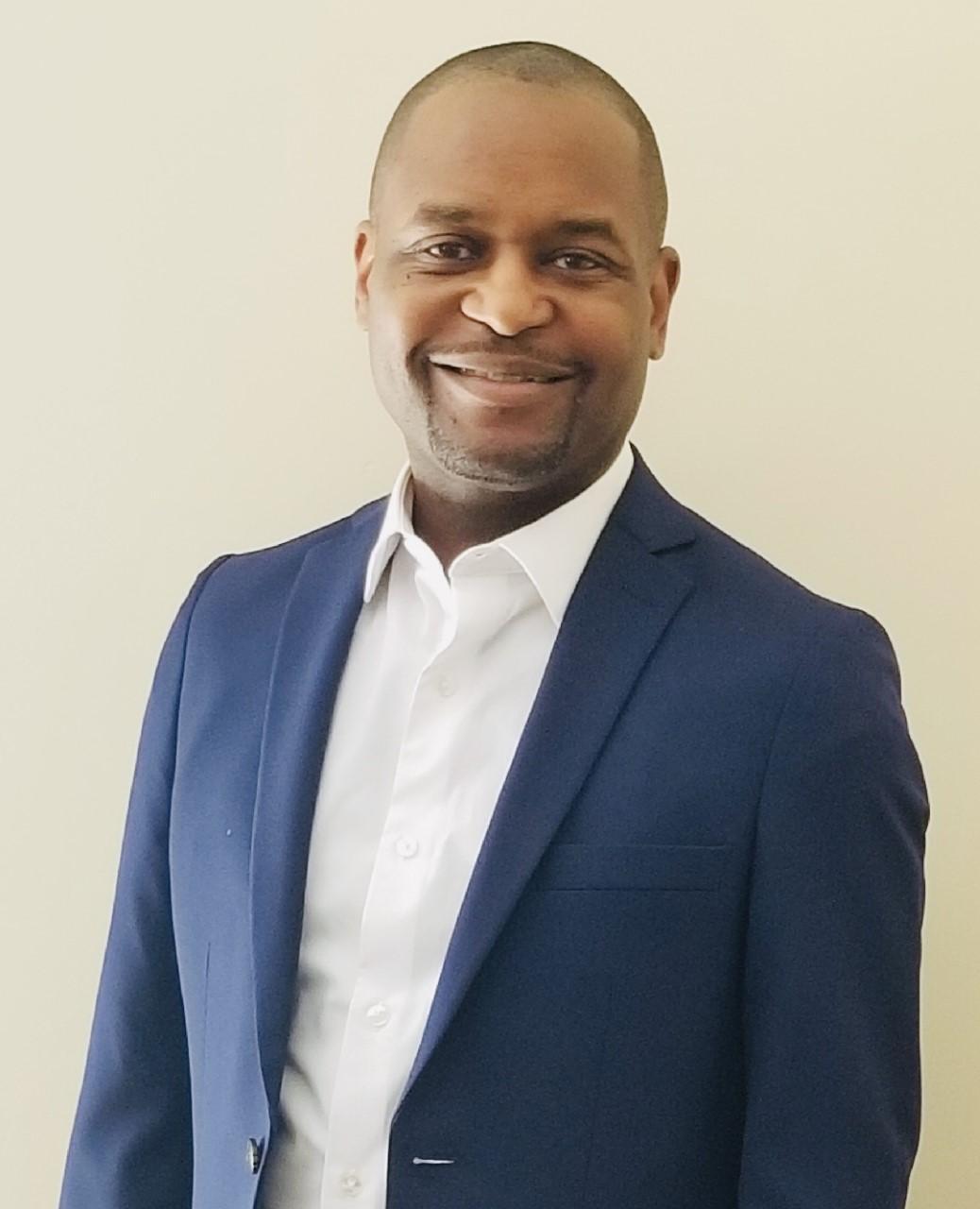
Brian L. Metcalf ran the same scheme at three employers, in two cities, for roughly a decade. The instrument was never complicated: a vendor who billed for work that did not exist, invoices he approved from the chair that was supposed to check them, and a split of the money on the other side. Chicago Public Schools paid for it first. A Chicago nonprofit paid for it second. Then he became the chief executive of the Tindley Accelerated Schools charter network in Indianapolis, and Tindley paid the most.
The numbers, each with its paper behind it in the Sources: $88,500 taken from Chicago Public Schools between about November 2012 and November 2017, found by Chicago’s own inspector general. $70,900 taken from the nonprofit City Year Chicago. $939,800 taken from Tindley between October 2019 and August 2022. A federal grand jury in Chicago indicted him on nine counts of wire fraud in an indictment unsealed in December 2023. In February 2025 he pleaded guilty to two counts. On August 19, 2026, a federal judge sentenced him to one year and a day in federal prison, and the judgment ordered $1,099,200 in restitution across the three defendants who ran the scheme with him.
This file is not a sex case, and it names no child. It is the follow-the-money file of this shelf: how one administrator carried one fake-invoice scheme from a principal’s office in Chicago to a charter network’s chief executive suite in Indianapolis, and what it took — a federal indictment, not any school system’s own controls — to stop it. The U.S. Attorney for the Northern District of Illinois, Andrew S. Boutros, said it at the end: “When officials defraud school systems, they are eroding trust and stealing from the very futures they are meant to protect.”
Everything in this file traces to the paper listed in the Sources. Where the record is still short a document — the federal case number itself among them — the file says so in the open, at §08, and prints nothing in the gap.
Brian Metcalf’s résumé is the first document in this case, because the scheme needed every line of it. In Chicago Public Schools he was a principal — at Gage Park High School and at Field Elementary, the two schools he led, per the Chicago Public Schools Office of Inspector General — and then a network chief: CPS states he served as an interim principal from October 2014 to July 2017, when he was promoted to chief of schools for Network 6, a subgroup of the district’s schools. He left CPS in March 2018; the district gave him a Do Not Hire designation that April, per the inspector general’s report. Between Chicago and Indianapolis he was the managing director of impact at City Year Chicago, the AmeriCorps nonprofit, according to the court documents in his federal case.
In late June 2019, Tindley Accelerated Schools announced him as its chief executive, as Chalkbeat Indiana reported from the school’s own announcement. He led the network — three Indianapolis charter schools serving roughly 1,000 students in kindergarten through twelfth grade — from July 2019 until December 2022. As the network’s CEO he made $190,726 in 2022, according to Indiana state public employment records as reported by Chalkbeat Indiana.
Every one of those posts held the same power: the authority to say a vendor had done work, and to set its payment in motion. The principal’s office, the network office, the nonprofit’s management suite, and finally the chief executive’s suite of a charter network — the chair changed. What the chair could do to an invoice never did.
At sentencing, the Department of Justice carried him as Brian Metcalf, 52, of Baltimore, Maryland. What the record in hand does not state — any Indiana educator license in his name — this file does not state either; it is on the pull list at §08.
The scheme’s first leg is documented by the watchdog of the system it robbed. In its Fiscal Year 2025 Annual Report, case number 22-002282, the Chicago Public Schools Office of Inspector General found that before Brian Metcalf left CPS in March 2018, he and CPS vendor Kimberly Maddox ran a multiyear phony-billing scheme that defrauded the district of at least $88,500, between approximately November 2012 and November 2017.
The mechanics, as the inspector general found them: CPS procurement records showed the district paying Maddox for professional development, grant-writing training, and student financial-aid counseling — services that were never provided. The vendor split the payments with the administrator who had set them in motion. The scheme aimed at the institutions Metcalf himself ran: it targeted the two schools he led as principal, and the network he led as chief.
And the paper trail held a tell the inspector general wrote down. Copies of Maddox’s résumé found in Metcalf’s own email showed, in the report’s words as the Chicago Sun-Times reported them, that she appeared to lack any professional experience with the topics she was billing the district to teach. The watchdog found the scheme anyway, years later; the district’s answer at the time was the quiet one — a Do Not Hire designation in April 2018, the month after he walked out with the scheme intact and, as the next sections show, portable.
Metcalf later admitted this leg under oath-equivalent paper: his federal plea agreement admitted that he and Maddox ran the same scheme at CPS and defrauded it of $88,500 (§06). The judgment that closed the case orders the two of them to pay Chicago Public Schools that $88,500 back (§07).
Between the school systems, the scheme stopped at a nonprofit. City Year Chicago — an AmeriCorps grantee whose members serve in schools — employed Brian Metcalf as its managing director of impact, according to the court documents in his federal case. The AmeriCorps Office of Inspector General, which investigated alongside the U.S. Attorney, described him in its own semiannual report to Congress as a manager at the grantee.
The indictment, as Chalkbeat Indiana reported it, laid the sequence out in one sentence: Metcalf and Maddox agreed that Maddox would submit fraudulent invoices to Metcalf, who would trigger payment from his employers — first, an unnamed nonprofit corporation from 2018 to 2019, then the Indianapolis charter network from October 2019. The nonprofit was later named in the judgment: City Year. Its loss was $70,900, and the AmeriCorps inspector general’s report states the method in the same words the Department of Justice used at sentencing: invoices for goods and services Maddox neither provided nor intended to provide, with a portion of the money remitted back to Metcalf.
The Department of Justice’s sentencing account folds this leg into the scheme’s running total: over nearly ten years, the school systems and the nonprofit paid Maddox nearly $700,000 on false claims that she, or her spouse, were providing services — money she split with Metcalf. The parts reconcile: $88,500 at CPS, $70,900 at City Year, and $539,800 more through Maddox at Tindley (§04) come to $699,200. The nonprofit leg is the smallest of the three — and it is the leg that proves the scheme belonged to the man, not to any one employer’s controls. It survived a change of city sector, from public school district to federally funded nonprofit, without changing a single moving part.
Indianapolis is where the scheme found its largest chair. From October 2019 to August 2022, according to the court documents, the Tindley Accelerated Schools network paid out $939,800 on fraudulent invoices run through two channels — both of them approved inside a network whose chief executive was Brian Metcalf.
The Maddox channel: $539,800. His plea agreement, as Chalkbeat Indiana reported it in detail, carries his own admissions. He worked with Maddox and another individual — named in the plea only as “Individual A” and never identified in this file — to submit invoices to Tindley for services that were never provided, from about the time he started at the network until August 2022. He told the network that at least one of the services Maddox would provide “was necessary to assist him in his job.” And he concealed the arrangement with a craftsman’s care: he advised that Maddox use the name of a real company Tindley had received an invoice from but decided not to employ; he copied that legitimate company’s invoice template and its language to make Maddox’s invoices “look legitimate”; and for two of Individual A’s invoices he used a fake address, because he did not want the network to become suspicious that Maddox and Individual A were submitting invoices from the same residence. Roughly half of the $539,800 came back to him, the plea states — and at his direction, Maddox and Individual A also paid his bills directly: his credit-card providers, his personal-loan providers, a mortgage provider, a construction company that fixed his roof, and a casino that hosted his family reunion.
The Campbell channel: $400,000. The Department of Justice tells this part plainly: while the Maddox channel ran, James Darnell Campbell, a consultant, approached Metcalf and said he wanted to join the scheme. Metcalf — by then the superintendent of the Indianapolis system — caused Tindley to pay Campbell nearly $400,000 on bogus invoices for consulting work never performed, and Campbell split the proceeds with him. The plea agreement prices the channel exactly, at $400,000, and names what the invoices claimed to buy: small-group instruction, and a tool that would monitor the attendance, behavior, and academic performance of students — none of it delivered. Metcalf received roughly half, in direct payments and in payments Campbell made toward his auto loan and his mortgage servicer.
Read the two channels together and the Indianapolis leg stops looking like carelessness anywhere but at the top. The network’s controls were not outsmarted by strangers. They were operated, from the chief executive’s chair, by the man the controls reported to.
A federal grand jury in the Northern District of Illinois indicted all three. The indictment was presented under seal and unsealed in December 2023: nine counts of wire fraud against Brian Metcalf, four counts against Kimberly Maddox, and five against James Darnell Campbell, in what the indictment described as a “scheme to defraud and to obtain money” from the Indianapolis charter system and the nonprofit, as Chalkbeat Indiana reported when the charges surfaced. Tindley’s board of directors confirmed to Chalkbeat that the network was one of the two victims named in the enterprise.
The government’s opening demands were as large as the scheme: through federal forfeiture law it sought just over $1 million from Metcalf, together with a Chicago property held in his name; $365,700 from Maddox; and $400,000 from Campbell, per Chalkbeat Indiana’s report of the indictment. Court documents at that stage indicated that all three defendants had pleaded not guilty.
One fact from the property records belongs in this section because of when it happened: the prosecution’s forfeiture filing named a Chicago home listed under Metcalf’s name — and property records indicate that Metcalf sold that home for $285,000 days after the indictment was filed in federal court, as Chalkbeat Indiana reported from the property records when his plea later became public. It is printed here at that grade: a property-records report, in the days immediately after the charges were filed.
One document this file does not yet hold is the indictment itself, and with it the case’s number. The number was searched for in this build and not located — the search, its scope, and the pull that closes it are registered at §08. This file prints no case number rather than print one it has not seen.
In February 2025, Brian Metcalf pleaded guilty to two of the nine wire-fraud counts, in a plea agreement filed in the U.S. District Court for the Northern District of Illinois and reported in detail by Chalkbeat Indiana and the Indianapolis Business Journal.
The agreement is an admission document, and its admissions are this file’s spine for the scheme sections: the Maddox and Individual A invoices at Tindley, the copied template, the fake address, and the directed payments to his own creditors, roof contractor, and casino (§04); the $400,000 Campbell channel for instruction and a monitoring tool that never existed (§04); the City Year fraud, priced at $70,900 (§03); and the Chicago leg — the plea admitted he defrauded the unnamed “School System 2” of $88,500 through fraudulent invoices to Maddox while he was a principal and a network-office executive there (§02). The plea acknowledged that the nonprofit and the Tindley schools were owed $1,010,700 between them, and that Metcalf and any jointly liable co-defendants must make full restitution.
The agreement also carried the two sides’ arithmetic for the sentence, as Chalkbeat reported it: the two counts of conviction carried a maximum of forty years; prosecutors suggested a range of 51 to 63 months in prison; Metcalf argued for 33 to 41 months. Both numbers are printed here because of what the court ultimately did with them (§07).
At Tindley, the plea landed in the middle of the network’s charter-renewal season. At the December 2024 renewal hearing, as Chalkbeat reported, the network’s chief financial officer, Sandra Tresselt, said Tindley had adopted new vendor policies and procedures and a new approval process for vendors and contracts, that the chief financial officer now reports to the board’s finance committee instead of to the president and CEO, and that the network had provided anti-fraud training and established an independent, anonymous whistleblower hotline. The then-board chair, Hilary Buttrick, called the fraud “a crime of opportunity at the time of a global pandemic that resulted in an unusual amount of emergency funds being dispersed to the school in a very short period of time.” The record above is what the opportunity consisted of: copied templates, a fake address, and a chief executive approving his own scheme’s invoices for thirty-four months.
On August 19, 2026, U.S. District Judge Lindsay C. Jenkins sentenced Brian Metcalf to one year and a day in federal prison. The Department of Justice announced the sentence the following day. Measured against the plea agreement’s own arithmetic — prosecutors suggesting 51 to 63 months, the defense arguing 33 to 41 (§06) — the term the court imposed sits below both sides’ numbers. This file prints the three figures side by side and draws no conclusion the paper does not draw; the figures are the record.
His co-defendants were sentenced a month earlier, in July 2026, by the same judge: Kimberly Maddox, who had pleaded guilty to one of her four counts, received two years in federal prison — the longest term of the three. James Darnell Campbell, who had pleaded guilty to one of his five counts, received one year and a day, the same term as Metcalf. The vendor who billed two school systems and a nonprofit, on the administrator’s templates, will serve longer than the administrator.
The restitution judgment: $1,099,200, due immediately — ordered against the three defendants in the judgment’s own slices, as Chalkbeat Indiana reported from the court documents, and never stated in this file as one man’s personal debt:
— To the Tindley network, $939,800: $539,800 from Metcalf and Maddox jointly, and $400,000 from Metcalf and Campbell jointly.
— To Chicago Public Schools, $88,500, from Metcalf and Maddox jointly.
— To City Year, $70,900, from Metcalf and Maddox jointly.
The sentences were announced by U.S. Attorney Andrew S. Boutros, with officials of the AmeriCorps, Education Department, and Chicago Public Schools inspector-general offices — three watchdogs for three victim institutions. Boutros: “When officials defraud school systems, they are eroding trust and stealing from the very futures they are meant to protect.” Chicago’s inspector general, Philip Wagenknecht: “Administrators who use their position to enrich themselves and deprive CPS families of critical resources will not be tolerated, and neither will vendors who steal from CPS.”
What this section does not print: where Metcalf is serving his term, when he reported, and when it ends. The Bureau of Prisons record that answers those questions is on the pull list (§08), and no custody claim stands in this file until it is pulled.
This file is built from the paper listed in the Sources, and it keeps a public register of the paper it does not yet hold. Each pull below closes a named gap in the sections above; when a document lands, the file updates at this same address.
1. The federal case number and docket — United States v. Metcalf, Maddox, and Campbell, U.S. District Court for the Northern District of Illinois. Searched for in this build and not located: the case number appears in no release and no report in hand, and this file prints none. The docket pull — PACER, or a docket mirror reached by live browser — also brings the indictment as filed (§05).
2. The plea agreement and the judgment, as filed — the counts of conviction by number; any term of supervised release (no source in hand states one, and none is printed); any fine or special assessment (none stated, none printed); and the restitution schedule in the judgment’s own words (§06, §07).
3. The custody record — U.S. Bureau of Prisons inmate locator: the facility, the reporting date, and the computed release date on a sentence of one year and a day imposed August 19, 2026 (§07).
4. The restitution’s payment status — the judgment ordered $1,099,200, due immediately. Whether any of it has been paid is a separate fact, and nothing about payment is printed until the enforcement record is pulled.
5. The credential check — Indiana Department of Education and Illinois State Board of Education records under his name. No license action appears anywhere in the record in hand — his career was Illinois-side and the Tindley post was a charter network’s chief executive — and this file confirms rather than assumes: the check is registered here, and the page states nothing about a license either way until it is run (§01).
6. A second source for the photograph — the portrait on this file’s home view is the photograph Tindley Accelerated Schools published of its chief executive on its own “Message from our CEO” page, over his own signature (Sources, photograph card). No independently captioned photograph of Metcalf was located in the case coverage in this build — the coverage illustrates the school’s building, not the man. A second, independently captioned photograph, checked against this one, closes the item; until it lands, the photograph stands in this file on the school’s own caption, disclosed as exactly that.
Every file in the Public Court Records series, in one place. Counties: St. Joseph, Elkhart, Marshall and Allen in Indiana; Berrien and Cass in Michigan; Middlesex in Massachusetts; Sussex in New Jersey. Every file is free, forever.
Every material claim in this file traces to a record below. Anything named in this file but not registered here stands in the file as reporting until the paper itself is in hand. Last checked November 11, 2026.
“Former Chicago School Principal and Two Others Sentenced to Federal Prison in Connection With Million-Dollar Procurement Fraud Schemes,” read in full for this file. Carries: the scheme’s shape across Chicago, Indianapolis, and the nonprofit; nearly $700,000 paid to Maddox and split with Metcalf; Campbell’s approach to Metcalf in Indianapolis and the nearly $400,000 in bogus consulting invoices; the three guilty pleas; the sentences — Metcalf, one year and a day, imposed by U.S. District Judge Lindsay C. Jenkins on the Wednesday the release dates to August 19, 2026; Maddox, two years, and Campbell, one year and a day, imposed the month before; restitution totaling $1,099,200; Metcalf’s age (52) and residence (Baltimore, Maryland), Maddox’s (55, Matteson, Illinois), and Campbell’s (59, Frankfort, Illinois); the investigating offices; the prosecutor, Assistant U.S. Attorney Jennifer Chang; and the statements of U.S. Attorney Andrew S. Boutros and Chicago Public Schools Inspector General Philip Wagenknecht, quoted at the release’s exact wording. Named in: Intro, §02–§04, §07.
The district watchdog’s own findings on the Chicago leg, read in full for this build: the multiyear phony-billing scheme with vendor Kimberly Maddox; the loss of at least $88,500 between approximately November 2012 and November 2017; the billed services — professional development, grant-writing training, and student financial-aid counseling, never provided; the scheme’s targets (the two schools Metcalf led as principal and the network he led as chief); his March 2018 departure and April 2018 Do Not Hire designation; and the résumé finding. Cross-checked against the OIG’s own January 7, 2026 press release and the Chicago Sun-Times’ and Chalkbeat Chicago’s reports of the same annual report, which agree on the case number, the figure, the window, and the services. Named in: §01, §02.
The federal watchdog for the nonprofit’s funding stream, on the indictment: three individuals indicted in the Northern District of Illinois for a scheme of false invoices and kickbacks; Kimberly Maddox submitting invoices to an AmeriCorps grantee through Brian Metcalf, a manager at the grantee, for goods and services she neither provided nor intended to provide, remitting a portion of the funds to him; and a similar scheme run through Metcalf’s subsequent position at a school system receiving Department of Education funds. Named in: §03, §05.
The indictment coverage, reported from the court documents: the nine wire-fraud counts against Metcalf (four against Maddox, five against Campbell); the scheme’s sequence from the nonprofit (2018–2019) to Tindley (from October 2019); the forfeiture demands, including the Chicago property; the initial not-guilty pleas; Tindley’s board confirmation that the network was a victim; Metcalf’s selection as CEO in late June 2019; and his 2022 salary of $190,726, from Indiana state public employment records. Named in: §01, §03, §05.
The plea coverage, reported from the plea agreement: guilty to two of the nine counts; the admissions that make up §04 and §06, including the copied invoice template, the fake address, the directed payments (credit cards, personal loans, mortgage, roof contractor, casino), the $539,800 Maddox channel, the $400,000 Campbell channel and what its invoices claimed to buy, the City Year figure of $70,900, and the admitted $88,500 fraud against “School System 2”; the acknowledged $1,010,700 in restitution to the nonprofit and Tindley; the guideline positions (51–63 months suggested by prosecutors, 33–41 argued by Metcalf, a forty-year maximum on the two counts); the Chicago home’s $285,000 sale days after the indictment, from property records; CPS’s account of his service (interim principal, October 2014 – July 2017; chief of Network 6 from July 2017); and Tindley’s post-case controls and its then-board chair’s statement, both from the December 2024 charter-renewal hearing. Named in: §01–§06.
The judgment coverage, reported from the court documents: the August 19, 2026 sentence of one year and a day; the co-defendants’ pleas and sentences (Maddox, one of four counts, two years; Campbell, one of five, one year and a day); the restitution judgment in its slices — Tindley $939,800 ($539,800 from Metcalf and Maddox jointly; $400,000 from Metcalf and Campbell jointly), Chicago Public Schools $88,500, City Year $70,900 — totaling $1,099,200 and due immediately, per a U.S. Attorney’s Office spokesperson; Metcalf’s managing-director-of-impact role at City Year Chicago, from the court documents; and the Tindley fraud window, October 2019 to August 2022. Named in: Intro, §01, §03, §07.
This file’s photograph is the portrait the Charles A. Tindley Accelerated Schools website published on its chief executive’s own message page — the photograph that ran with a holiday message signed, directly beneath the text, “Dr. Brian L. Metcalf.” The copy in hand was extracted byte-for-byte (no recompression) from the page capture saved by this library’s photo-recovery work on November 11, 2026: a solo, professional head-and-shoulders portrait, one adult, no other person in the frame. The identification is stated exactly: the face is tied to the name by the school’s own page — the network’s own published photograph of its chief executive, over his own signature. No independently captioned photograph of Metcalf was located in the case coverage in this build; the coverage illustrates the Tindley Genesis Academy building, not the man. A second source is registered as an open pull (§08, item 6), and until it lands the photograph stands in this file on the school’s caption, disclosed as exactly that. Named in: the home view.
No source in hand prints the federal case number: not the Department of Justice’s releases, not the inspectors general’s reports, not the indictment, plea, or judgment coverage. It was searched for in this build — docket mirrors and court-record search included — and not located. (One search result carrying a similar number belongs to a different man in a different district’s case and is excluded from this file entirely.) This file prints no case number rather than print one it has not seen; the PACER pull that closes the gap is registered at §08, item 1. Named in: §05, §08.