Shana Taylor was a guidance counselor in an Indianapolis Public Schools alternative school. In February 2016, a parent walked into a school office carrying evidence — messages and inappropriate photos — and handed it to an assistant principal. What the district did next is the first half of this file: for six days, in a district whose own superintendent would call it “a clear case of incompetence,” nobody made the report the law required.
The second half is the bargain. Taylor was charged with eleven counts — nine of them felony child seduction in the contemporaneous court-record reporting; a later court-record account counts the same eleven differently (§03 prints both). She pleaded guilty to three felony counts of dissemination of matter harmful to minors — the photos she admitted sending — and the seduction charges were dismissed as part of the deal. The sentence was six years of home detention: no prison, and no sex-offender registration. She agreed to give up her teaching license.
And the third half is the price tag. Two district officials were criminally charged for the reporting failure; two others were fired and sued. In May 2019 the school board approved about $595,000 in settlements of the lawsuits this case left behind — one student’s suit and the two fired officials’ suits — without disclosing the amounts; a newspaper’s records requests made them public.
This file is built from the paper: the court documents as reported from the criminal case, the district’s own released emails, the officials’ own statements, and the settlement figures the Indianapolis Star obtained through public-records requests. Every claim stands at the grade its evidence earns, and §08 lists every pull that would raise a grade — including the two places where the record disagrees with itself, printed here as disagreements, not smoothed over.
One rule governs every line: the students in this case are students. No name, no initials, no age, no detail that could point to a child appears in this file, and none ever will. The sexual-contact allegations were charged and then dismissed under the plea, and this file carries them as exactly that — allegations attached to dismissed charges, never as findings. The subjects of this file are the counselor, the bargain she was given, and the district that sat on the report.
Shana Taylor worked for Indianapolis Public Schools as a guidance counselor in one of the district’s alternative schools in 2015 and 2016 — a position built on access and trust, in a building for students the system had already moved out of its regular classrooms.
The plea she later entered fixes the window the case turns on: her admissions cover October 1, 2015 through January 31, 2016. What brought the case into the open was not an audit, a tip line, or the district’s own safeguards. It was a parent, who learned what was happening and carried the evidence — copies of messages and inappropriate photos, according to the court documents — into a school office on February 17, 2016, and put it in front of Assistant Principal William Jensen.
Taylor was met by the district’s human-resources case manager the next day and placed on administrative leave. She was arrested on February 25, 2016, and the school board fired her on March 4, 2016. Everything about her own case moved at ordinary speed once it moved. What did not move — for six days, while the evidence sat in administrators’ inboxes — was the one phone call Indiana law required before any of it. That is §02.
Indiana law is not ambiguous about what happens next when a school employee receives evidence like this: a report goes to the Department of Child Services or to law enforcement, immediately. The court documents and the district’s own released emails show what happened instead.
On February 17, 2016, the parent presented the evidence to Assistant Principal Jensen. Jensen contacted Principal Mark Cosand — who was on medical leave and came in to deal with it — and Deb Leser, the director of student services, who directed him to Lela “Tina” Hester, the human-resources director. Jensen forwarded the messages and photos to Shalon Dabney, the human-resources case manager. On February 18, Cosand emailed to have Taylor’s badge deactivated, and Dabney met Taylor and placed her on administrative leave. The district protected its building. It did not make its report.
The superintendent knew on the first day. An IPS spokeswoman confirmed that Superintendent Lewis Ferebee learned of the allegations on February 17. His own account of what he was told: that the district was “following our protocols and procedures,” and that the failure surfaced only when the employee was being interviewed by human-resources staff and someone discovered the report had never been made. The district’s failure was not discovered until February 22, by an employee processing termination paperwork. A school official called DCS on February 23 — six days after the evidence arrived. And court records indicate, as the Indianapolis Star reported, that officials did not report until after they knew a news outlet was aware of the allegations.
Ferebee said the rest of it himself, at a March 4, 2016 news conference: “This is a clear case of incompetence.” An internal investigation found that several staff members admitted they knew they were required to report the allegations and failed to do so — each assuming someone else had filed the report. The count of officials who knew grew as the record did: at least six in the first reporting, at least seven a month later, and at least twelve district officials in the court records reported in 2019. It was never a secret inside the district. For six days it simply never reached either place the law named — the Department of Child Services or law enforcement — the report the statute required immediately, to one or the other.
One more detail from the district’s own emails, released in May 2016: after Taylor was placed on leave, the district let her keep her school laptop. An Indianapolis Metropolitan Police Department detective had to request it, on February 23, to search it for forensic evidence.
Taylor was arrested on February 25, 2016 and held on a $100,000 bond. In March 2016, Marion County prosecutors charged her. The contemporaneous reporting — the Indianapolis Star and the Indianapolis Business Journal, both working from the court records — gives the filing as eleven counts: nine felony counts of child seduction, one felony count of dissemination of matter harmful to minors, and one misdemeanor count of contributing to the delinquency of a minor.
This file prints a conflict here, because the record carries one. The Indiana Lawyer, writing in 2018 from the court record, counts the same eleven counts differently: eight counts of Level 5 felony child seduction and three counts of Level 6 felony dissemination of matter harmful to minors. The difference is not arithmetic — both filings total eleven — it is the split, and the split matters, because the later version carries the dissemination counts at exactly the number Taylor ultimately pleaded guilty to. Whether the two accounts describe an original filing and an amended one is a question only the Marion County docket answers, and that pull is registered in §08 (ST-01). Until it lands, both versions stand in this file, labeled with their sources and their dates.
What the charges were is not in dispute: the State’s case, as filed, was that a school counselor had engaged in sexual conduct with students in her care and had sent them harmful material. The child-seduction counts carried that allegation. Hold the posture exactly, because §05 depends on it: a charge is an allegation the State must prove, and in this case the State ultimately did not prove, plead, or even keep the seduction counts. They were dismissed as part of her plea — which is why this file never states the alleged conduct as something she did.
Taylor was not the only person charged out of February 2016. In April 2016, prosecutors charged the two human-resources officials at the center of the six days — HR director Lela “Tina” Hester and HR case manager Shalon Dabney — each with a misdemeanor count of failure to make a report. Marion County Prosecutor Terry Curry said he would not pursue charges against the other officials who knew and did not report.
Hester’s explanation exists in her own words, in an email prosecutors cited: in her haste to make certain the kids were protected, she neglected to confirm that Jensen had made the DCS report. This file prints the outcomes with the same precision as the charges: Hester and Dabney later entered pretrial diversion programs. Diversion is not a conviction, and neither woman stands convicted of anything in this record.
The employment consequences reached further than the criminal ones. On June 30, 2016, the IPS board fired Assistant Principal William Jensen — the man who received the parent’s evidence and passed it up the chain — and Deb Leser, the director of student services, for insubordination and neglect of duty. Both sued the district in federal court, and a federal judge later ruled that Superintendent Ferebee and other senior officials could be named as defendants in their suits. The endings of those two lawsuits are not claimed in this file; the docket checks are registered in §08 (ST-03).
Step back and look at the shape of it. The counselor was fired and charged. The two HR officials were charged and diverted. The assistant principal who took the evidence to his superiors was fired by the district those superiors ran. And the superintendent who knew on day one called it incompetence — in his own administration’s handling, by his own account of what he was told. Who in that chain has answered for the six days is a question the paper, so far, leaves where this section leaves it.
The criminal case ended in a bargain, and the bargain is the center of this file. Shana Taylor pleaded guilty to three felony counts of dissemination of matter harmful to minors. In her plea admissions, covering October 1, 2015 through January 31, 2016, she admitted sending nude photos of herself to two minors.
Everything else went away. Under the plea, prosecutors dismissed the child-seduction charges — all of them, the counts that carried the sexual-contact allegations — and dismissed the contributing count as well. The legal consequence of that structure deserves to be stated plainly: the only conduct Taylor stands convicted of is sending the photos. The alleged sexual contact was charged, was never tried, was never admitted, and was dropped by the State as part of the deal. Anyone who describes her as convicted of seducing students is describing a case that does not exist.
The plea carried two more terms that define what the case cost her. She was not required to register as a sex offender. And she agreed to relinquish her teaching license — the credential surrendered by agreement, as part of the bargain, rather than taken by the State after a contested proceeding. The sentence the bargain produced is §06.
On January 3, 2017, Shana Taylor was sentenced to six years of home detention. No prison term was imposed. Combined with the plea’s other terms — no sex-offender registration, her license relinquished by agreement — the sentence is the whole punishment the criminal case produced: a counselor who admitted sending nude photos of herself to students in her district was sentenced to serve it at home.
This file prints one conflict on the date, because the record carries it. The contemporaneous sentencing coverage — WTHR’s report, carried January 4, 2017 — places the sentencing on Tuesday, January 3, 2017, and the Indianapolis Business Journal’s later account agrees she was sentenced in 2017. A May 2017 Indianapolis Star column says she “was sentenced in December.” One plausible reading is that the column compressed a December plea and a January sentencing into one word; the plea-change coverage is archived in December 2016. But plausible is not proven, and this file does not upgrade it: the dated sentencing stands on the contemporaneous report, the December reference stands beside it as an unresolved conflict, and the docket pull that settles it is registered in §08 (ST-01).
Read the sentence against the charges one more time. Eleven counts filed — the split between seduction and dissemination counts stands in §03 in both of the record’s versions. Three counts pleaded, all of them the photographs. Six years, all of it at home, no registry. Whether that arithmetic is the justice system working as designed or failing in public is a judgment this file leaves to its readers.
The criminal case closed in January 2017. On May 30, 2019, the IPS school board approved settlements in three lawsuits arising from the Taylor case, without disclosing the amounts; the figures became public in June 2019 through the Indianapolis Star’s public-records requests. A student who said Taylor abused and harassed them settled the suit for $95,000. The other two suits were the fired officials’ — Jensen’s and Leser’s federal cases (§04) — settled together for $500,000. Together: about $595,000.
The district denied the allegations in the suits, and a settlement is not an admission; this file states them as settlements, nothing more. The district’s chief of staff and general counsel, Ahmed Young, said the district was pleased to resolve the matters. The lawsuits themselves arose from the allegations against Taylor and from the district’s handling of them — the same six days in §02, now priced.
This file also does not round: coverage headlined the total at $600,000, but the components are $95,000 and $500,000, and the file prints the components and their sum — about $595,000.
That is the full public ledger of the case. A counselor’s photos and the charges they produced: home detention. A district’s six-day silence: two officials charged and diverted, two officials fired, and roughly $595,000 of public money in settlements the board approved on May 30, 2019 without disclosing the amounts — amounts the public learned that June only because a newspaper filed for the records.
This file prints its gaps in the open. Each pull below closes one, and the file will be updated at this same address when the paper lands.
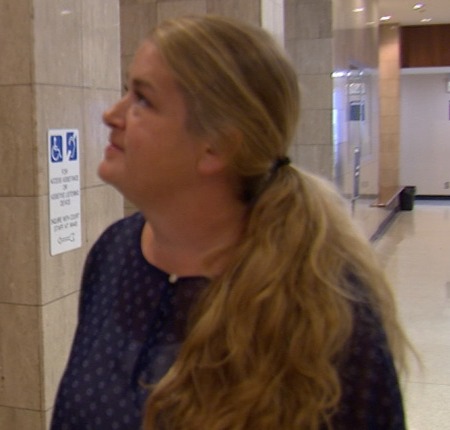
The lead photograph is a television-news video still published by WTHR with its coverage of this case, captioned on the File page as exactly that — never as a booking photo. Because its identity originally rested on the station’s own filename, this file required a second source before the photograph could run: a second Indianapolis station, WISH-TV, published its own image of Taylor in February 2016, the month of her arrest, and that image has been located in the station’s archive. That side-by-side was performed on November 12, 2026: the WISH-TV image, recovered from the station’s archive (Wayback Machine snapshot of February 21, 2025), was opened beside this file’s crop of the WTHR frame, and the two stations’ images show the same woman. The comparison is recorded in this file’s package audit record, and the photograph is cleared to run.
The chronological case summary in State of Indiana v. Shana Taylor (Marion Superior Court), pulled directly from Indiana MyCase: the cause number, the original and any amended charge split (this file prints the contemporaneous 9/1/1 split beside the later 8/3 split, §03), the plea-entry date, and the sentencing entry — January 3, 2017, against the December reference in one column (§06). The outcome in this file rests on the concordance of the named outlets in Sources; this pull closes it at the highest grade.
The Indiana Department of Education’s educator-license entry for Taylor: the formal record of the relinquishment she agreed to under the plea (§05).
Docket checks of No. 1:16-cv-2047 and No. 1:16-cv-2044 (U.S. District Court, Southern District of Indiana) — the suits filed by Jensen and Leser after their June 30, 2016 firings (§04): each case’s ending, printed in the words the docket supports — the dismissal entries themselves, for the two suits the June 2019 reporting records as settled together for $500,000 (§07), are what this pull closes.
Every file in the Public Court Records series, in one place. Counties: St. Joseph, Elkhart, Marshall, Allen, Marion, Hamilton, Hancock, Hendricks, Johnson and Sullivan in Indiana; Berrien, Cass and St. Joseph in Michigan; Middlesex in Massachusetts; Muscatine in Iowa; Will in Illinois; St. Tammany Parish in Louisiana; Sussex in New Jersey. Every file is free, forever.
Every material claim in this file traces to a record below. Anything named in this file but not registered here stands in the file as reporting until the paper itself is in hand. Last checked November 11, 2026.
The contemporaneous case record: the parent’s February 17, 2016 presentation of the evidence; the internal chain (Jensen, Cosand, Leser, Hester, Dabney); the superintendent’s knowledge on the first day, confirmed by the district’s spokeswoman; the six-day delay and the February 23 report; the March 4 charges and firing; the April 2016 failure-to-report charges against Hester and Dabney and Prosecutor Curry’s declination as to the others; the district’s May 26, 2016 release of 270 PDFs of emails (including the laptop detail and Hester’s explanation); the plea admissions’ conduct window (May 31, 2019); and the June 2019 settlement figures, obtained through public-records requests. Named in: Intro, §01–§07.
The March 2016 charges, the $100,000 bond, the firing, and the superintendent’s statements; and the June 11, 2019 settlement account: three lawsuits settled for $95,000 and $500,000 (jointly) — “almost $600,000” in total — approved without disclosure, the district’s denial, and the plea and sentence terms restated (guilty to three dissemination counts; six years of home detention; no registration; license relinquished by agreement; the other charges dropped). Named in: Intro, §02, §03, §05, §06, §07.
Contemporaneous sentencing report: Taylor sentenced on Tuesday (January 3, 2017) to six years of home detention under the plea — the photos admitted, the seduction charges dismissed in the exchange, no registration, license relinquished by agreement. WTHR is also the publisher of this file’s lead photograph, a television-news video still from its coverage of the case (see the caption on the File page and §08, ST-PHOTO). Named in: §05, §06.
The failure-to-report defendants’ pretrial diversion outcomes; the June 30, 2016 firings of Jensen and Leser and their federal suits (Nos. 1:16-cv-2047 and 1:16-cv-2044), including the ruling that the superintendent and other senior officials could be named as defendants; and the 2018 court-record account of the charge split (eight child-seduction counts, three dissemination counts) that stands in §03 beside the contemporaneous split. Named in: §03, §04.
Carried for the conflict it creates and nothing else: its statement that Taylor “was sentenced in December,” printed in §06 beside the contemporaneous January 3, 2017 sentencing report, unresolved until the docket pull (ST-01). Named in: §06.
The lead photograph: WTHR’s published video still from its coverage of this case, recovered from the station’s own image archive (Wayback Machine capture, October 28, 2016) and cropped to the subject alone. The identity cross-check source: WISH-TV’s own February 2016 image of Taylor, located in that station’s archive during this build. The side-by-side gate was performed on November 12, 2026 — the WISH-TV image opened beside the crop of the WTHR frame — and the two stations’ images show the same woman; the clearance is recorded at §08 (ST-PHOTO) and in the package’s audit record. Named in: File page caption, §08.