
There is a brick rowhouse at 417 West Chew Avenue in Olney, North Philadelphia. For about fifteen years it was the home of Raymond "R.C." Horsch, a photographer and filmmaker who made violent erotic films, and in the summer of 2026 Philadelphia police and the FBI went through it and carried out the archive he left behind — more than a million photographs, videos, and pages of writing. CBS News Philadelphia called the place a "house of horrors." The police have never used that name. It is a media label, and it is worth remembering that everything in this story has to be measured against what has actually been proven, because so far the proof and the label are a long way apart.
What the archive holds is the reason for the investigation. Detectives have identified 58 people in the material. Seven women are linked to the house. Five of them appear dead in the photographs and videos. Two more are missing. But no body has ever been found, no death has been confirmed, and some of what Horsch filmed was staged for his movies — separating the staged scenes from real ones is the central problem of the whole case, and it has not been solved.
The man at the center of it cannot be charged with anything. Raymond Horsch died in May 2025, a year before the investigation began, and he was never charged with a homicide in his life. The living defendant is his son, Eugene Horsch, 44, who owns the house and lived there with his father. A traffic stop on June 19, 2026 — guns and fake federal credentials in Eugene's car, and a passenger carrying identification in a missing woman's name — is what opened the house to police. Eugene is charged with two things: holding guns as a convicted felon, and holding fake federal credentials. He is not charged with homicide, kidnapping, or any woman's disappearance, and police have said plainly, on the record, that nothing they have recovered connects him to the women. Judge John Milton Younge’s September 29, 2026 order scheduled Eugene’s federal trial for March 22, 2027. No later plea entry or scheduling order has been verified for this file.
The search of the house itself ended on October 23, 2026. The only bones found in the yard were animal bones. The review of the archive goes on off-site — about thirty percent of it had been reviewed as of September — and the DNA work is expected to run into the spring of 2027. As of the latest reporting, on November 11, 2026, no human remains had been recovered or identified, and no one had been charged with harming any of the seven women.
The Chew Avenue house was a Hoersch family house for more than half a century before it was ever Raymond's or Eugene's. Raymond's grandparents, Albert Hoersch and Helen E. Hoersch, were living on West Chew Street in Olney from at least 1968. Helen E. died there in August 1968, and Albert died in July 1972.
In later years the property was held by Raymond's aunt, Helen M. Hoersch. In 2000 she signed a durable power of attorney naming her nephew Raymond as her agent — Virginia Killian was the alternate — and expressly authorizing him to lease, sell, convey, or mortgage 417 West Chew Avenue. That document was not recorded with the Philadelphia Department of Records until October 26, 2007, as Document No. 51798674. Helen M. Hoersch died on April 5, 2004, aged 83, at the home of her nephew, Ray Horsch.
Then, on October 1, 2007, a deed transferred the house from Helen M. Hoersch to Eugene A. Horsch for one dollar. It sits in the deed index as Document No. 51798675, recorded immediately after the power of attorney, and Raymond signed it on Helen's behalf under that power of attorney — more than three years after her death. That is a legal irregularity visible on the face of the record, and it has never been resolved. The Inquirer's own summary of the chain is the plain one: Horsch acquired the Chew Avenue house after his aunt's death and in 2007 used a power of attorney to transfer it to his son for one dollar, and Raymond then moved into the house with Eugene.
So the answer to who owns the house is Eugene. He has held title since October 1, 2007, and he was the owner of record when the investigation began. Commissioner Kevin Bethel and several outlets have described the place in substance as the home owned by Eugene Horsch where his father also lived — that wording circulates in summaries of the September 16, 2026 briefing, though the exact sentence could not be verified word for word. When reporting calls it "Raymond's house," it is describing who lived and worked there, not who held the deed. Eugene later mortgaged the property twice, a $25,000 mortgage and a $64,000 revolving credit-line mortgage, both secured by the house.
Before Olney, Raymond's base was the family house in Chalfont, in Bucks County, at 523 North Main Street. Federal authorities seized that house after his July 2009 marijuana case, and he moved into Chew Avenue with Eugene afterward — roughly 2010 onward — and lived there until his death in May 2025.
The documented activity at the address runs a long time. Eugene ran a marijuana grow out of the house in 2013. Imagery depicting missing women inside the house carries 2017 metadata. A photograph of Blair Tonzelli sat in rotation as the lead image on Raymond's website from about 2020 until at least September 2023. And from about 2017 to 2021, that website, rchorsch.com, advertised an escort service whose client reviews describe visits to the Olney house. One more piece of paper attaches to the address: a business entity called IVQ Contracting LLC, Pennsylvania entity number 14946546, registered on October 17, 2025, with its registered office at 417 West Chew Avenue. The public record does not name an owner, member, manager, or organizer for it, so the registration by itself does not establish that Eugene owned or operated it.
What searchers found inside, in the June and July 2026 searches, is the heart of the case. There was the archive: more than fifty hard drives and other electronic devices holding over 600,000 images, some 70,000 videos, and 10,000 pages of writings and drawings — more than a million digital items in total. There were five urns believed to contain cremated remains; police said on September 16 that three are believed to hold the ashes of Raymond Horsch, Raymond's sister, and a friend, and that the contents of the other two were not established. There was a basement laboratory setup — a homemade lab, a 55-gallon drum connected to water lines, and more than twenty containers of unknown substances, which were sent to a laboratory in Chicago for analysis. Law-enforcement sources told CBS that the July excavation warrant sought evidence of "wet cremation," the chemical breakdown of remains. Police have not established that any such process was ever used on a person at that property, and no official has ever said it was. There was another firearm and gun parts, ammunition, more purported federal credentials, and a marijuana-growing operation. A section of sewer line was removed in July, and two clogged sewer laterals were sent for testing; their contents were still unknown in October reporting. During the October phase of the search, investigators found a hidden safe behind a wall. What was in it has not been disclosed.
The house had been searched before. On May 18, 2025 — three days after Raymond's death — there was a fire at the house, and narcotics officers who went in found marijuana plants, firearms, and containers of chemicals. Back in 2013, police seized about 190 marijuana plants and 20 pounds of packaged marijuana from the house; police put the street value at roughly $1.9 million, which was a police estimate then and remains one now.
The intensive search of the property ended on October 23, 2026, after roughly three weeks of excavation, wall and floor removal, and soil screening. No human remains were found. The digital review continues off-site, and the DNA cross-referencing of unidentified remains and profiles was expected, in reporting, to run into the spring of 2027.
Raymond Charles Horsch was born Raymond Charles Hoersch Jr. on May 5, 1943, in East Stroudsburg, Pennsylvania, and he died in May 2025 at the age of 82. His birth name was spelled Hoersch, sometimes Hörsch, and that is the name on his early court cases. Over his life he used other names: "Richard Harris"; "Stanley Eugene Stokowski," which was the identity of a real California chemist — one source spells it Stanley Edward Stokowski, and that variant has never been resolved; as a filmmaker, "Ich Bin Niemand"; and a 1990s directing credit as "RC Hürsch."
The first thing to settle about the house is whose operation it was. It was Raymond's. On the entire public record, he ran it alone — no employee, partner, or crew member for the Chew Avenue productions has ever been named in a court paper or a major news report. He shot, produced, and published himself. There are people documented around his work across a fifty-year career — collaborators, enablers, associates from particular episodes — and they are named further on in this account. They were not a staff, and nobody has ever shown that any of them worked at the house.
Raymond Horsch made his living in front of a camera and behind one. In October 1969 he opened the Underground Cinema 16, an avant-garde 16mm theater in a former live theater at 2021 Sansom Street in Philadelphia, partly to finance a film of his own. The city shut it within two weeks for operating without a license. It reopened, and he later ran it as the Roxy.
His first feature was The Erotic Memoirs of a Male Chauvinist Pig, in 1973, distributed by Sam Lake — that is according to Horsch himself. He produced and directed Black Mass in 1975. For Femme Productions he directed Lovers in 1993 and Lovers 2 in 1994. And he kept releasing films until shortly before his death, among them Whore!, Slaves in 2014, and Deleted Scenes: A Serial Killer's Video Journal in 2016, a film shot over twelve years under the name Ich Bin Niemand. His erotic and BDSM photography was published in anthologies including The Mammoth Book of Erotic Photography and Photo Sex, and in 2014 he exhibited at a gallery in Kensington. Critics were accusing him of exploiting his subjects as early as that year, in the Philadelphia City Paper.
He wrote, too, and published himself. In 2014, through CreateSpace, he put out Empathy: The Memoir of an Empathetic Serial Killer (ISBN 9781492890553), along with Annie, written with Anna M. Ferkuniak, Transgressions, and Slaves. Amazon sold his books until the third week of September 2026, when the investigation had made him infamous. He was also a trained chemist by trade, and during his fugitive years in New Zealand, from 1981 to 1984, he worked for a company called Chemical Technology Limited under the stolen Stokowski identity, on fabricated academic credentials, doing alternative-fuels work on ethanol.
His website, rchorsch.com, carried his work for years. From about 2017 to 2021 it also advertised an escort service — its motto was "I fear what I love" — and the client reviews on it describe visits to the Olney house. A photograph of Blair Tonzelli, one of the missing women, was in rotation as the site's lead image from about 2020 until at least September 2023.
Horsch was also his own mythmaker. Between 2014 and 2021 he maintained and revised his own Wikipedia article more than 150 times, under the account name "S.E. Stokowski." In long recorded interviews — The Rialto Report recorded him in 2013 — he claimed a life of freelance wiretapping and burglary for the Wackenhut Corporation, marijuana flights out of Mexico, and air-show flying. Those claims are his own statements. They are part of his story because he told them, and they are not treated as fact anywhere here.
Police and the reporting agree on the pattern. Horsch recruited women in Kensington, Philadelphia's open-air drug market, offering cash and drugs — and, by report, shelter and access to the house — to women struggling with addiction, to take part in his photography and his films. Deputy Commissioner Frank Vanore described the setup in one video on the record: Horsch gave the woman drugs and money before he restrained her. Who those women were, and what the record actually shows about each of them, comes later in this account. They come first in importance, but the case has to be understood in the order it was built: the house, the man, and then the women.
Raymond Horsch's criminal history is fifty years long, and it matters here for two reasons: it shows how often the system had hold of him and let him go, and it produced the deal that put him back on the street in 2013, after which the women in this case disappeared.
The earliest entry is a weak one and is labeled as such. In 1962, an Allentown alderman fined a "Raymond Hoersch, 18, of Fox Chase" twenty-five dollars for shoplifting at Hess's department store. The identification rests on the name and the age alone and has never been confirmed.
On January 26, 1973, he pleaded guilty to passing bad checks. Even the venue is in dispute: Wikipedia, citing the Inquirer, says North Carolina; the CrimeTimelines compilation says South Carolina. That conflict stands, unresolved, in the sources.
In December 1974 he was arrested in Hatboro, Pennsylvania, after passing a counterfeit ten-dollar bill at the Hatboro Card Shop. He was driving a stolen car with a fraudulent registration and license. The U.S. Secret Service raided the print operation — a small building on Taylor Street in Doylestown — and the Chalfont house, and seized $180,000 in counterfeit ten-dollar bills, a Secret Service figure carried in the contemporary newspapers, along with fake driver's licenses and registrations. An accomplice, Charles J. Griffith, was arrested at the print shop. Horsch got a two-year prison sentence.
On February 4, 1977, the DEA arrested him — under the name Richard Harris — for manufacturing methamphetamine and possession with intent to distribute, under 21 U.S.C. § 841(a)(1), in the Eastern District of Pennsylvania, Docket No. 77-CR-89. Police had raided his home and found what they alleged was meth-lab equipment. He did not stay to face the case. He fled.
The fugitive years ran from 1977 to 1985. He went to the West Coast, stole the identity of a California chemist named Stanley Stokowski, and moved to Timaru, New Zealand, in 1980. In Nevada that year he married Myroslawa Anna Ferkuniak under the false identity. He worked as a chemist. His son Eugene was born in New Zealand in 1981. In 1984 he was caught re-entering New Zealand carrying five fake passports, and he fled again — allegedly stealing a passport in a break-in on the way out. The FBI caught him in Orlando, Florida, in 1985, and he was extradited to Philadelphia. He was sentenced to four years and released early, in 1987. A psychological evaluation done for the defense in 1985, which has since become part of the record, measured his IQ at 140 and described bipolar and paranoid personality features, grandiosity, and hostility.
His military record was litigated in court, too. He enlisted in the Pennsylvania Army National Guard on October 17, 1965, was ordered to involuntary active duty, and failed to report to Fort Dix on July 19, 1970 — he went AWOL. He returned to military control on April 5, 1972, and left again the next day. He sued the Secretary of the Army over it and lost: Hoersch v. Froehlke, 382 F. Supp. 1235 (E.D. Pa. 1974), Civil Action No. 72-1759.
In March 2009, he was arrested in Kensington for attempting to lure a nine-year-old girl into his car. In a 2010 bench trial he was convicted of luring a child into a motor vehicle and corrupting the morals of a minor, and sentenced to two and a half to five years. On appeal, the case collapsed when the child did not testify again; the conviction was vacated, the charges were dropped, and the record was expunged in 2015. That is not a standing conviction, and it is not stated as one anywhere here. But two things about it are current news. The expunged file still existed in 2026, and in September 2026 a judge ordered a temporary halt to its destruction, at the Inquirer's request. And the original prosecutor and the complainant, now an adult, have described the encounter publicly.
Four months after the luring arrest, in July 2009, federal agents charged him over the Chalfont house, where more than 450 cannabis plants — 455 in some accounts — and two shotguns were found. The house was seized. The case was United States v. Raymond Horsch, No. 2:09-cr-00794-RBS, in the Eastern District of Pennsylvania. In January 2011 he pleaded guilty to three things: possession of 100 or more cannabis plants with intent to distribute; possession of a short-barreled shotgun in furtherance of a drug-trafficking crime; and possession of a firearm by a convicted felon.
Then came the deal, and it is the hinge of the whole story. Under his plea agreement, Horsch gave federal prosecutors information about, in the words of the deal, "crimes against minors, including child prostitution, marijuana and cocaine trafficking, and fraud." The government assessed what he gave them as "credible and reliable but too old," and said it "played little role in any ongoing cases or future prosecutions." Against a twenty-year minimum exposure, Judge R. Barclay Surrick sentenced him to fifty-four months in total — fifty-three months on the drug and felon-in-possession counts, plus one consecutive month on the shotgun count — with five years of supervised release on two of the counts and three years on the remaining count, all running concurrently, on top — the judgment's own terms, in Case No. 2:09-cr-00794-RBS. The sentencing hearing was June 28, 2012, and the judgment was finalized on resentencing on July 3, 2012. He was released in 2013. The cooperation records were unsealed on October 29, 2026, and the unsealing is what drove the fall's "deal with the devil" coverage — CBS's argument, spelled out in its November 10 special, was that every woman who disappeared did so after the 2012 deal freed Horsch early.
At that 2012 sentencing, his ex-wife Amy McHale testified for him. She told the court he had helped her overcome addiction, and that he had helped other women from the street. Four years later, in June 2016, Amy McHale disappeared, last known to be at the Chew Avenue house. Her story is with the other women below.
One more thing came out of the 2012 proceedings. His defense attorney, Jerome Brown, told Judge Surrick that the then-mayor of Philadelphia, John F. Street, had discouraged police from arresting Horsch because of his filmmaking documenting addiction in Kensington, and Brown said Street had given Horsch a letter to that effect. Street did not respond to the Inquirer. His son, State Senator Sharif Street, called the claim "out of character." A police spokesperson denied that such letters were issued to filmmakers. The letter itself has never been produced. Brown, it should be noted, is the same lawyer who now represents Eugene.
The strongest source for Eugene's record is the federal affidavit itself, which lists his predicate felonies. In Philadelphia, case CP-51-CR-0610831-2003, he was convicted on January 26, 2004, of aggravated assault and aggravated assault by vehicle, and sentenced to two to four years. The underlying 2003 crash, according to Inquirer reporting, was a drunk-driving collision that left the other driver in a vegetative state for sixteen years, until that driver's death. In Montgomery County, case CP-46-CR-0004613-2013, he was convicted on February 7, 2014, of possession with intent to distribute, and sentenced to two to four years. And in Philadelphia, case CP-51-CR-0004911-2025, he was convicted on November 21, 2025, of possession with intent to distribute, on a negotiated guilty plea before Judge Zachary C. Shaffer, and sentenced to three years' probation. The arrest under that case came in May 2025, on marijuana and amphetamine charges, following the search of the Chew Avenue house after the fire.
The 2013 grow at the house itself seized 190 plants and 20 pounds of prepackaged marijuana. There is a live conflict about his sentence for that period: secondary reporting says he was sentenced to four to eight years for the 2013 Chew Avenue case, while the federal affidavit's predicate list shows the February 7, 2014 Montgomery County distribution conviction at two to four years. These may be two different cases, or one of the figures may be wrong. It is unresolved on the sources reached.
The smaller cases fill out the picture. In Philadelphia, MC-51-CR-0035773-2009, he was found guilty of intentional possession on December 14, 2010, with no further penalty. In Montgomery County, CP-46-CR-0000652-2012, he pleaded guilty to small-amount marijuana and got thirty days' probation. A July 2007 Montgomery County arrest ended in a paraphernalia plea on June 4, 2009, and a year of probation. In March 2026 he was charged with aggravated assault after allegedly stabbing a man in the abdomen near 8th and Market Streets; the charges were withdrawn when the complainant did not appear, and he was released from jail in May 2026. All told, he has at least ten prior arrests, across drugs, alleged assaults, and DUI. And one fact from his record matters directly to the women's stories: Eugene was in prison in June 2016, when Amy McHale disappeared.
In 2014 Horsch self-published Empathy: The Memoir of an Empathetic Serial Killer. The publisher's own description calls the book fiction. In it, the narrator strangles a woman named Krista and dissolves her body with sodium hydroxide in a basement bathtub.
There is a real woman named Krista in this story. Krista Killen lived at the Chew Avenue house for years and appeared in Horsch's films, and she died in August 2025 of a drug overdose. The book came out in 2014, eleven years before her death. Nothing connects the fictional "Krista" to Krista Killen except the name and the man, and any inference drawn from it is speculation. It is not drawn here.
What can be said is that Horsch deliberately blurred fiction and autobiography across his books, his films, his website, and his interviews — and that the police now face exactly the same blur inside his archive. Deputy Commissioner Vanore and the FBI's Wayne Jacobs both made that point on September 16, 2026. It is not a literary observation. It is the investigative problem.
Raymond Horsch died in May 2025, at 82, of chronic obstructive pulmonary disease, a lung condition, at the Chew Avenue house. He was cremated. The exact day has not been firmly published in the sources reached; mid-May is implied by the house fire of May 18, 2025, which reporting describes as occurring three days after his death. Police believe one of the five urns recovered from the house holds his ashes. He was never charged with a homicide in his life, and because he is dead, he never will be.
Nobody, on the record — that is the finding, and it is worth stating carefully. No reporting and no court paper names any employee, crew member, or partner in the Chew Avenue productions. What follows is everyone the record does name around Raymond Horsch's work, with the actual role each person is documented to have played. Anyone not on this list has not been named by a source worth relying on.
Charles J. Griffith is the only named co-defendant in any of Horsch's early operations. He was arrested on December 10, 1974, at the Doylestown print shop where the counterfeit ten-dollar bills and fake licenses were being produced, and charged alongside Horsch on the federal counterfeiting counts. Both men were held, then released on $25,000 bail each. Nothing connects Griffith to the Chew Avenue house or to anything Horsch did in the decades after.
John Butterworth, a Philadelphia photographer, is the earliest documented working associate. His equipment was inside The Renaissance Studio, at 752 South 2nd Street, where Hoersch was filming in April 1971, and he is described as Horsch's business partner, with a film collaboration later. No connection between Butterworth and the 2026 investigation has been reported.
John Rutherford, a Christchurch lawyer, was Horsch's business partner in New Zealand, in the alternative-fuels venture — Chemical Technology Limited — that employed "Stanley Stokowski." Rutherford transferred an amphibious aircraft to the company, and he later commented on the record about Horsch's lack of a water-landing rating. Whether Rutherford knew who his partner really was is not established in the sources reached.
Amy McHale married Raymond in 2004. They divorced in 2008 and stayed close. Reporting describes her as his "one-time collaborator." On June 28, 2012, she testified at his federal sentencing that he had helped her beat addiction and had helped other women from the street — testimony that stayed sealed until the fall of 2026. She disappeared in June 2016, last known to be at the Chew Avenue house, and her full account is with the women below.
Krista Killen — Krista Marie Killen — lived at 417 West Chew Avenue intermittently for years and appeared in Raymond Horsch's films; one relationship index lists her as his "companion and film performer." Friends told the Inquirer that Eugene could turn violently aggressive while using drugs, and described Eugene once breaking through a basement door armed and threatening Killen, with Raymond intervening. That is witness reporting, not a conviction. The fire in her second-floor bedroom — a lit cigarette, while she was away — happened three days after Raymond's death in May 2025. Killen died on August 16, 2025. The 2026 search affidavit gave her cause of death as "drug intoxication," and the city medical examiner found she had overdosed. She is not one of the seven women in this case, and no reporting reached treats her as a suspected homicide victim.
"George" was not a house worker. He was, by the accounts that exist, the man who let Horsch into a Kensington crematorium. The Inquirer reported on September 21, 2026, that Horsch photographed and filmed human remains at Liberty Cremations, the crematorium attached to the Garzone Funeral Home. A woman who worked on Horsch's films from 2003 told the paper Horsch bragged that his contact there was an employee named "George," whom he paid with drugs — and, in other accounts, cash. Four people identified the man as George Newsome, of Ruth Street, a block from the crematorium. Newsome was arrested for heroin possession in 2011 and cocaine possession in 2013, and he died in 2014. Gerald Garzone told the Inquirer he had never heard of Horsch, acknowledged knowing a George from the neighborhood, and declined to say whether he had employed him. The Garzone operation itself — brothers Louis and Gerald Garzone, with funeral director James A. McCafferty Jr. — pleaded guilty in 2008 to selling more than 244 corpses to a New Jersey tissue-recovery company, at $1,000 a body by the Inquirer's account, and the business closed in 2007. Horsch was never charged in that case and never named in it. Police have not established any link between the crematorium access and any missing woman — every publicly identified missing woman disappeared years after the crematorium closed. Horsch exhibited the crematorium and autopsy imagery at a Kensington gallery in 2014.
Blair Tonzelli appears twice in this story. She is one of the missing women, and her account is below. But a friend also told police that she had spent time at the house and reportedly worked as Raymond Horsch's home health aide. If that is accurate, she is the only person reported to have held any working role inside the house at all — as his aide, not as production staff.
The unnamed collaborator is, in a way, the most significant name that is not a name. The woman who told the Inquirer about the crematorium brag worked with Horsch on several of his films beginning in 2003. She is not named in the reporting, and she is not named here. She is the clearest evidence that at least one other person did participate in his productions in the 2000s.
The woman in the car on June 19, 2026, is not staff and is not identified here. She carried identification bearing her own photograph and Blair Tonzelli's name. She reportedly told investigators that Eugene produced the false ID for her and that she did not know Tonzelli. Police have not named her. She is a witness and a subject of the traffic stop, nothing more on the record.
And on business paper only: Sam Lake distributed Horsch's 1973 feature, by Horsch's own account; Femme Productions was the company for which he directed Lovers and Lovers 2; and IVQ Contracting LLC, registered at the house address on October 17, 2025, names no owner in the public record at all.
Eugene Albert Horsch is 44. He was born in 1981 in New Zealand, to Raymond Horsch and Myroslawa Anna Ferkuniak — who died in 1989 — while his father was a fugitive living under a stolen identity. He has held title to 417 West Chew Avenue since October 1, 2007. As of the latest reporting, on October 1, 2026, he was in federal custody at FDC Philadelphia.
What is documented about his role at the house is narrower than what is assumed about it, and the difference matters. Documented: he lived at the house with his father for years and owned it. He ran the 2013 marijuana grow there himself — police traced that case from his arrest at age 31, after noting dirt under his fingernails, to what the police account called "a house Eugene owned on Chew Avenue." He was in the house's orbit during the production years: an unnamed woman told 6abc on September 26, 2026, that she met both Raymond and Eugene in Camden, New Jersey, in 2012, went back with them to the Chew Avenue house, used drugs, blacked out, and woke to Raymond photographing her. That is an allegation from an unnamed accuser, and it stays labeled that way. His defense attorney, Jerome Brown — the same lawyer who represented his father — says the chemicals and laboratory items in the house were Raymond's, and that Eugene did not know what was stored in the basement.
What is assumed but not documented: that Eugene worked on, filmed, distributed, or knew the contents of his father's archive; that he took part in any production; that he knew anything about any woman's fate. No court paper and no major outlet has documented any of it. Police said the opposite on the record on September 16, 2026: nothing recovered connects Eugene to the dead or missing women, and no reviewed material places him in the videos involving women who appear injured or deceased.
Eugene's case begins with a federal complaint sworn by DEA Special Agent Curtis A. McRoy — Case 2:26-mj-01270, sworn June 26, 2026, before Magistrate Judge Craig M. Straw — charging him under 18 U.S.C. § 922(g)(1), possession of a firearm by a convicted felon. The affidavit behind it has been read in full, and it tells the stop this way.
At about 8:00 a.m. on June 19, 2026, U.S. Park Ranger Paul Scholtz, working with Officer Sean Carey, approached a black BMW parked by a fire hydrant in a law-enforcement area at 6th and Market, in Independence National Historical Park. The car, Pennsylvania plate NCB7708, was registered to Horsch. From the back seat came a woman's voice: "you're going to hurt me!" The name the woman gave belonged to a missing person reported out of Philadelphia.
In the car, the affidavit says, there was a loaded Taurus G2S .40 S&W, serial number ABC419937, and a loaded FIE Arminius Titan Tiger .38 Special revolver with its serial number obliterated. There was suspected crack cocaine. There was a cattle prod and a collapsible baton, switchblades, police handcuffs and handcuff keys. In the trunk was a canvas bag holding a DEA badge and credential wallet — badges and ID cards bearing Horsch's photograph and identifying him as DEA Agent "Eugene Fredrick Steiner," badge number 07384. The affidavit states, flatly: "HORSCH is not employed by the DEA and never has been." Horsch admitted the guns were not the woman's, and admitted he was a felon. ATF Special Agent Brian Peters test-fired both guns on June 26, 2026. Both worked.
On July 8, 2026 — the indictment itself, ECF No. 9, is dated July 8; the news coverage announcing it ran on July 9 — a federal grand jury indicted Eugene on two counts in United States v. Eugene Albert Horsch, No. 2:26-cr-00296-JMY, in the Eastern District of Pennsylvania, before Judge John Milton Younge. Count one is possession of a firearm by a convicted felon: the two loaded guns, one with an obliterated serial number. Count two is possession of an unlawfully produced document and authentication feature: the fraudulent DEA and FBI credentials, which prosecutors allege were produced on a computer at the house.
That is the whole of his charge sheet, and it should be held flat: gun possession by a felon, and fake federal credentials. Nothing else. Not homicide. Not kidnapping. Not any disappearance. He is presumed innocent of the two counts he does face.
On plea: no plea appears on the public record as of the latest reporting, on November 3, 2026. His attorney has said he plans to plead not guilty. No plea agreement has been reported. The case has been continued — pretrial motions are due December 7, 2026, responses December 14, 2026, a motions hearing is set for January 5, 2027, and trial for March 22, 2027, at 9:30 a.m. in Courtroom 15B of the U.S. Courthouse at 601 Market Street, Philadelphia, under the Third Amended Scheduling Order, Document 28, filed September 29, 2026.
He was held first at Curran-Fromhold Correctional Facility on the state case — bail was reported at $500,000 — and then in federal custody at FDC Philadelphia, where he remained as of October 1, 2026.
Pennsylvania had filed five state charges of its own out of the June 19 stop, gun and drug offenses. At the preliminary hearing on August 6, 2026, an assistant district attorney withdrew all five and told the judge the U.S. Attorney's Office would handle the case.
Raymond Horsch's criminal history is fifty years long, and it matters here for two reasons: it shows how often the system had hold of him and let him go, and it produced the deal that put him back on the street in 2013, after which the women in this case disappeared.
The earliest entry is a weak one and is labeled as such. In 1962, an Allentown alderman fined a "Raymond Hoersch, 18, of Fox Chase" twenty-five dollars for shoplifting at Hess's department store. The identification rests on the name and the age alone and has never been confirmed.
On January 26, 1973, he pleaded guilty to passing bad checks. Even the venue is in dispute: Wikipedia, citing the Inquirer, says North Carolina; the CrimeTimelines compilation says South Carolina. That conflict stands, unresolved, in the sources.
In December 1974 he was arrested in Hatboro, Pennsylvania, after passing a counterfeit ten-dollar bill at the Hatboro Card Shop. He was driving a stolen car with a fraudulent registration and license. The U.S. Secret Service raided the print operation — a small building on Taylor Street in Doylestown — and the Chalfont house, and seized $180,000 in counterfeit ten-dollar bills, a Secret Service figure carried in the contemporary newspapers, along with fake driver's licenses and registrations. An accomplice, Charles J. Griffith, was arrested at the print shop. Horsch got a two-year prison sentence.
On February 4, 1977, the DEA arrested him — under the name Richard Harris — for manufacturing methamphetamine and possession with intent to distribute, under 21 U.S.C. § 841(a)(1), in the Eastern District of Pennsylvania, Docket No. 77-CR-89. Police had raided his home and found what they alleged was meth-lab equipment. He did not stay to face the case. He fled.
The fugitive years ran from 1977 to 1985. He went to the West Coast, stole the identity of a California chemist named Stanley Stokowski, and moved to Timaru, New Zealand, in 1980. In Nevada that year he married Myroslawa Anna Ferkuniak under the false identity. He worked as a chemist. His son Eugene was born in New Zealand in 1981. In 1984 he was caught re-entering New Zealand carrying five fake passports, and he fled again — allegedly stealing a passport in a break-in on the way out. The FBI caught him in Orlando, Florida, in 1985, and he was extradited to Philadelphia. He was sentenced to four years and released early, in 1987. A psychological evaluation done for the defense in 1985, which has since become part of the record, measured his IQ at 140 and described bipolar and paranoid personality features, grandiosity, and hostility.
His military record was litigated in court, too. He enlisted in the Pennsylvania Army National Guard on October 17, 1965, was ordered to involuntary active duty, and failed to report to Fort Dix on July 19, 1970 — he went AWOL. He returned to military control on April 5, 1972, and left again the next day. He sued the Secretary of the Army over it and lost: Hoersch v. Froehlke, 382 F. Supp. 1235 (E.D. Pa. 1974), Civil Action No. 72-1759.
In March 2009, he was arrested in Kensington for attempting to lure a nine-year-old girl into his car. In a 2010 bench trial he was convicted of luring a child into a motor vehicle and corrupting the morals of a minor, and sentenced to two and a half to five years. On appeal, the case collapsed when the child did not testify again; the conviction was vacated, the charges were dropped, and the record was expunged in 2015. That is not a standing conviction, and it is not stated as one anywhere here. But two things about it are current news. The expunged file still existed in 2026, and in September 2026 a judge ordered a temporary halt to its destruction, at the Inquirer's request. And the original prosecutor and the complainant, now an adult, have described the encounter publicly.
Four months after the luring arrest, in July 2009, federal agents charged him over the Chalfont house, where more than 450 cannabis plants — 455 in some accounts — and two shotguns were found. The house was seized. The case was United States v. Raymond Horsch, No. 2:09-cr-00794-RBS, in the Eastern District of Pennsylvania. In January 2011 he pleaded guilty to three things: possession of 100 or more cannabis plants with intent to distribute; possession of a short-barreled shotgun in furtherance of a drug-trafficking crime; and possession of a firearm by a convicted felon.
Then came the deal, and it is the hinge of the whole story. Under his plea agreement, Horsch gave federal prosecutors information about, in the words of the deal, "crimes against minors, including child prostitution, marijuana and cocaine trafficking, and fraud." The government assessed what he gave them as "credible and reliable but too old," and said it "played little role in any ongoing cases or future prosecutions." Against a twenty-year minimum exposure, Judge R. Barclay Surrick sentenced him to fifty-four months in total — fifty-three months on the drug and felon-in-possession counts, plus one consecutive month on the shotgun count — with five years of supervised release on two of the counts and three years on the remaining count, all running concurrently, on top — the judgment's own terms, in Case No. 2:09-cr-00794-RBS. The sentencing hearing was June 28, 2012, and the judgment was finalized on resentencing on July 3, 2012. He was released in 2013. The cooperation records were unsealed on October 29, 2026, and the unsealing is what drove the fall's "deal with the devil" coverage — CBS's argument, spelled out in its November 10 special, was that every woman who disappeared did so after the 2012 deal freed Horsch early.
At that 2012 sentencing, his ex-wife Amy McHale testified for him. She told the court he had helped her overcome addiction, and that he had helped other women from the street. Four years later, in June 2016, Amy McHale disappeared, last known to be at the Chew Avenue house. Her story is with the other women below.
One more thing came out of the 2012 proceedings. His defense attorney, Jerome Brown, told Judge Surrick that the then-mayor of Philadelphia, John F. Street, had discouraged police from arresting Horsch because of his filmmaking documenting addiction in Kensington, and Brown said Street had given Horsch a letter to that effect. Street did not respond to the Inquirer. His son, State Senator Sharif Street, called the claim "out of character." A police spokesperson denied that such letters were issued to filmmakers. The letter itself has never been produced. Brown, it should be noted, is the same lawyer who now represents Eugene.
The strongest source for Eugene's record is the federal affidavit itself, which lists his predicate felonies. In Philadelphia, case CP-51-CR-0610831-2003, he was convicted on January 26, 2004, of aggravated assault and aggravated assault by vehicle, and sentenced to two to four years. The underlying 2003 crash, according to Inquirer reporting, was a drunk-driving collision that left the other driver in a vegetative state for sixteen years, until that driver's death. In Montgomery County, case CP-46-CR-0004613-2013, he was convicted on February 7, 2014, of possession with intent to distribute, and sentenced to two to four years. And in Philadelphia, case CP-51-CR-0004911-2025, he was convicted on November 21, 2025, of possession with intent to distribute, on a negotiated guilty plea before Judge Zachary C. Shaffer, and sentenced to three years' probation. The arrest under that case came in May 2025, on marijuana and amphetamine charges, following the search of the Chew Avenue house after the fire.
The 2013 grow at the house itself seized 190 plants and 20 pounds of prepackaged marijuana. There is a live conflict about his sentence for that period: secondary reporting says he was sentenced to four to eight years for the 2013 Chew Avenue case, while the federal affidavit's predicate list shows the February 7, 2014 Montgomery County distribution conviction at two to four years. These may be two different cases, or one of the figures may be wrong. It is unresolved on the sources reached.
The smaller cases fill out the picture. In Philadelphia, MC-51-CR-0035773-2009, he was found guilty of intentional possession on December 14, 2010, with no further penalty. In Montgomery County, CP-46-CR-0000652-2012, he pleaded guilty to small-amount marijuana and got thirty days' probation. A July 2007 Montgomery County arrest ended in a paraphernalia plea on June 4, 2009, and a year of probation. In March 2026 he was charged with aggravated assault after allegedly stabbing a man in the abdomen near 8th and Market Streets; the charges were withdrawn when the complainant did not appear, and he was released from jail in May 2026. All told, he has at least ten prior arrests, across drugs, alleged assaults, and DUI. And one fact from his record matters directly to the women's stories: Eugene was in prison in June 2016, when Amy McHale disappeared.
Four things are alleged about Eugene beyond his charges, and all four are allegations — accusations and witness accounts, none of them adjudicated.
Court documents, as reported by The Guardian, say Eugene allegedly told investigators that Blair Tonzelli would "never be seen again." People interviewed by investigators said Eugene claimed to know how chemicals could break down human remains, including reducing a body for disposal through plumbing — that is an allegation about something he said, and no corroborating physical finding has been made public. The unnamed Camden woman alleged that Eugene later threatened her in Camden, saying he could kill her and no one would find her; detectives questioned her specifically about that alleged threat. And friends of Krista Killen said that after her death on August 16, 2025, Eugene told them he had had her cremated; a Google review under his name describes arranging a cremation and transferring an unnamed woman's remains from a temporary urn into a marble urn he purchased. The review does not name the woman, and no authority has connected it to any missing woman.
His defense, through Jerome Brown, is that Eugene is not guilty beyond the guns and drugs, that the chemicals and laboratory items were his father's, that Eugene did not know what was in the basement, and that the serial-killer writings were Raymond's.
Police count seven women linked to the house, and the structure of that number matters. Five women appear deceased in the recovered imagery. Two more — Amy McHale and Blair Tonzelli — are missing and linked to the house, but they have not been identified as among the five. Some national roundups have listed all seven as "appearing dead." That is not the police account, and it is not the account here.
Gabrielle Amarando was 22 when she disappeared in 2012. Inspector Raymond Evers said on August 12, 2026, that photographs and videos on the first hard drive examined appear to show her alive inside the house, and later apparently deceased. But the images carry 2017 metadata, by Vanore's account — five years after a 2012 disappearance. If the metadata is accurate and the identification is right, those two facts cannot both sit comfortably, and investigators have not reconciled them in public. That discrepancy is left open here, the way the police have left it. There is no body and no DNA.
Maribel Fresses disappeared in 2018, at 26 or 27 — the briefing compilation says 26, other reporting says 27, and the variant stands. Her full name in records compilations is Maribel Ivette Fresses, and her nickname was "Bella." Her posture in the case is the same as Amarando's: on the first hard drive, she appears alive in the house and later apparently deceased, in material carrying 2017 metadata by Vanore's briefing account.
Nicole Fusaro was 27 when she disappeared in 2018. She was last seen in Kensington on July 19, 2018. Her full name is Nicole Amanda Fusaro. She is the woman in the video at the center of the case — the one Vanore described on September 16, 2026: drugs and money given, a woman handcuffed to a bed, a zip tie tightened around her neck with a pliers-type tool until she stops moving, two cameras rolling, metadata dating the file to 2017. Police believe that video shows Raymond Horsch killing a woman. Her family identified the woman as Nicole Fusaro. The police department itself will not confirm the identity of anyone tied to a specific piece of evidence — Sergeant Eric Gripp has said so — so the identification stands as family-said and reported, in the Inquirer on September 11 and October 2, 2026, and her body has not been recovered.
The unidentified woman is one of the five. Police said on September 16, 2026, that a woman depicted in the material, believed to have been in her mid-20s, appears deceased and remains unidentified. She can be identified only through the official process — the DNA cross-referencing expected to run into the spring of 2027. No identifying information about her is published here, and none should be hunted.
Lelia Mae Wright disappeared in 2016, after struggling with addiction in Kensington. Police said on September 16, 2026, that photographs show a woman — identified by investigators, 25 years old, never reported missing — unconscious with visible injuries and later apparently deceased, and that they were withholding her name at her family's request. She is one of the five believed dead. In November 2026, her family reversed its own September decision and went public: her uncle identified her, and relatives said she was recognized by tattoos on her neck, chest, and back.
Her name comes with a sourcing note, and the note travels with the name every time. She was not named by one local outlet alone. Two independent newsrooms published the identification on the same day, November 11, 2026: the Philadelphia Focal, whose account is built on her family — the uncle, the tattoos, the 2016 disappearance — and the Philadelphia Inquirer, under the bylines of Barbara Laker, Ryan W. Briggs, Max Marin, and Ellie Rushing, with the headline "Lelia Mae Wright, who vanished in 2016, identified as one of seven Horsch victims." The Inquirer's own Threads post framed it as "police now identify Lelia Mae Wright." Two limits stay attached. The Inquirer article text is paywalled, so its exact internal attribution has not been read firsthand. And no police release, briefing transcript, or on-record statement naming her has been located on any readable record. She is therefore stated here the way she can honestly be stated: identified by her family, and reported by the Inquirer and the Focal. Never "police-confirmed." She is one of the seven, not an eighth.
Amy McHale — Amy Teresa McHale — is Raymond's ex-wife, and she is missing, not among the five. She was last known to be at the Chew Avenue house in 2016. Her family says she went there after an argument with her mother, with whom she lived. As of August 13, 2026, the digital evidence reviewed had not linked McHale to the scene. Eugene was in prison when she disappeared. In 2012 she stood up in a federal courtroom and testified for the man the police now believe may have killed her.
Blair Tonzelli was 35 when she was reported missing in February 2023. A friend last heard from her in August 2022, and a friend later told police she was last seen at Raymond's Chew Avenue residence. She had spent time at the house, and reportedly worked there as Raymond's home health aide. A photograph of her was the lead image on rchorsch.com from about 2020 until at least September 2023 — months after the missing-person report was filed. At the first briefing, in June 2026, Vanore said he had no evidence Tonzelli had ever been inside the house, and as of August 13, 2026, the reviewed digital evidence had not linked her to the scene. The identification card in her name, in the car with Eugene, is where her name enters the criminal case. The allegation that Eugene said she would "never be seen again" is unadjudicated.
Spellings, for the record: Horsch is the spelling in the federal court captions; he was born Hoersch, also printed Hörsch, and the "Horsh" that appears in weak sources is an error. Amarando is the Inquirer and police spelling; variants in circulation include Amarado and Armando — some wire summaries of the September 16 briefing printed "Gabrielle Armando, 27" — along with garbled forms on social media. Tonzelli is the Inquirer and police spelling, against Tanzelli and Tenzelli elsewhere. Fusaro and McHale are consistent everywhere. Killen is consistent in the stronger sources. The stolen chemist identity is "Stanley Eugene Stokowski" in most sources and "Stanley Edward Stokowski" in one; unresolved. And Eugene's credential alias is spelled "Eugene Fredrick Steiner" in the federal affidavit itself.
The department's voice in this case has been Frank Vanore, Deputy Commissioner of Investigations. At the first briefing, in June 2026, he said he had no evidence Blair Tonzelli had been inside the house. On September 16, 2026, he described the zip-tie video on the record for the first time — Horsch gives a woman drugs and money, handcuffs her to a bed, and tightens a zip tie around her neck with a pliers-type tool until she stops moving; the file's metadata dates it to 2017; it was filmed with two cameras. Vanore stated on the record that no body was ever recovered at the house. Some of the material is "play-acting," he said, and some "we believe could be real," and "we're not there yet" on calling any of it a killing. Also on the record that day: nothing recovered connects Eugene to the dead or missing women, and ten of the people depicted in the material later died of overdoses.
Inspector Raymond Evers spoke on August 12, 2026. On the first hard drive examined, he said, investigators found videos and photographs appearing to show Maribel Fresses and Gabrielle Amarando alive inside the house and later apparently deceased. The Medical Examiner's Office could not formally determine cause or manner of death, because no remains had been recovered. By then, more than 95 search warrants had been served, and only about five to seven percent of the digital material had been reviewed.
Wayne Jacobs, the FBI's Special Agent in Charge in Philadelphia, put the review at about thirty percent of the million-plus items on September 16, 2026, and said Horsch's work makes it "incredibly difficult" to definitively determine whether the women were actually harmed. "The objective here is thoroughness, not simply speed," he said. "We need to ensure that we do not overlook something that could help identify a victim, establish what occurred, provide an answer to a family that has been looking for one." Commissioner Kevin J. Bethel said the same day that the department has a duty to the families wondering whether a loved one lost her life in that house or somewhere else, and that officers would canvass the block before the disruptive late-September search phase.
And there is a correction owed to the way this case travels online. The viral version — "58 women identified, 5 confirmed dead" — overstates the official record twice. Police said 58 people were identified in the material; it was The Guardian that reported them as 58 women. Being identified means investigators know who is depicted, and most of those people are living witnesses, not victims. And no death is "confirmed." Five women are believed dead from imagery, with no remains, no autopsies, and no death certificates.
Even the 58 break down three incompatible ways, depending on who was counting and when, and the three versions stand here unreconciled because nobody has reconciled them. The police briefing, as compiled on September 16: 16 located and interviewed; 25 known alive and being contacted; 3 contacted who declined to speak; 10 depicted who later died of overdoses. The Guardian, on October 2, 2026: 25 located but not yet interviewed; 19 had spoken with detectives but declined to cooperate. A CBS broadcast summary in November 2026: 16 women interviewed and described as uncooperative. Those snapshots conflict. None of them is merged into the others here.
Start with the paperwork that has not been seen. The indictment document itself in Eugene's case, and the detention record, have not been read for this account; what is known of the indictment rests on the McRoy complaint affidavit, which was read in full, and on consistent descriptions of its two counts. The obvious pull is the docket for 2:26-cr-00296 itself — indictment, detention order, any superseding indictment — and the motions due December 7, 2026, may add filings.
The 2026 house search warrants are the biggest sealed body of paper in the case. More than 95 warrants were served, and most remain sealed — CBS put it at "over 100 warrants remain sealed" on October 7, 2026. The search affidavit that described Krista Killen's cause of death and the "wet cremation" theory is the single most valuable document that could be unsealed. The deed chain for the house, too, rests on two compilations of the city's records index; the instruments themselves — the power of attorney, Document 51798674, and the deed, Document 51798675 — along with the tax and property history for 417 West Chew Avenue, would settle the 2007 post-death transfer and confirm no later conveyance. The Pennsylvania court portal would settle Eugene's 2013–2014 sentence conflict. Raymond's 1977 meth case, Docket No. 77-CR-89, sits in the era before electronic dockets; the indictment, the 1985 four-year sentence, and any co-defendants would come from the archives. His 1974 counterfeiting case has no federal case number in any source reached, and that docket would also document what happened to Charles Griffith. The full docket of United States v. Raymond Horsch, 2:09-cr-00794-RBS — the government's cooperation motion, the June 28, 2012 sentencing transcript, which was partially unsealed in October and November 2026 and reportedly re-sealed in part on November 3, 2026, and any 2012 correspondence about the mayor's letter — is another pull. So is the expunged 2009 child-luring file, preserved by court order on September 24, 2026, at the Inquirer's request, with access still being litigated. And IVQ Contracting LLC's organizer or member is not in the public record reached; the state entity detail, or any Philadelphia licenses and inspections permits at the address, might name one.
Some things no pull can get. The two unaccounted urns, the Chicago laboratory's results on the twenty-plus containers, and the sewer-lateral tests have produced no public results; they resolve only when an official announces something. The DNA identifications — the unidentified woman, and the October reports of human DNA — resolve only through the Medical Examiner and the FBI. And whether anyone else will be charged is simply open: the Camden accuser's account and the chemical-disposal statements attributed to Eugene are the only public threads pointing at a living person, both of them are allegations, and no charging decision has been announced.
The conflicts in the record stand as they were found. Ownership: many outlets call it Raymond's house and say the property belonged to him, while the deed record and the police say title has been Eugene's since 2007 and Raymond was the occupant and operator; this account follows the deed record. The 1973 bad-check plea was in North Carolina by one account and South Carolina by another. On human DNA, source-based reports on October 13 and 14, 2026, said human DNA had been found in the home, while reporting on October 20 and 21 said the Medical Examiner had found nothing human among the items collected to that point. Both stand, dated, unresolved. On the sequence of the five women, the police account puts Amarando, Fresses, Fusaro, Wright, and the unidentified woman among the five who appear deceased, while some national roundups derived from CNN listed McHale and Tonzelli among them; the police account controls here. The "wet cremation" claim needs its fence restated: sources describe a warrant seeking evidence of chemical dissolution and a drum plumbed to water lines, and no official has stated that remains were dissolved at that house — the stronger claim circulating on social media is not supported by any source in this account. The imaging conflict — women who disappeared in 2012 and 2018 appearing in files carrying 2017 metadata — is an authentication question, and the police have not answered it in public. Raymond's exact day of death in May 2025 has not been firmly published. And the indictment in Eugene's case is dated July 8, 2026, on the document itself, whatever day the coverage announced it.
The story starts long before anyone searched the house. Gabrielle Amarando disappeared in 2012, at 22. In June 2016, Amy McHale disappeared. Maribel Fresses and Nicole Fusaro disappeared in 2018 — Fusaro last seen in Kensington on July 19 of that year. Blair Tonzelli was last heard from by a friend in August 2022, and reported missing in February 2023. None of those disappearances was connected to Chew Avenue at the time.
Raymond Horsch died in May 2025. Three days after his death came the fire, and the narcotics search that found marijuana, firearms, and chemical containers in the house, and Eugene's arrest on the drug charges he would plead to that November. On August 16, 2025, Krista Killen died of an overdose.
The case broke open on June 19, 2026, with a ranger, a badly parked BMW, and a woman in the back seat carrying identification in a missing woman's name. The federal complaint followed on June 26. Through late June and July, search teams went through the house and found the archive on its fifty-plus drives, the five urns, the basement lab, the 55-gallon drum, the twenty-plus chemical containers, the grow operation, and still more credentials. A section of sewer line came out. Sources said an excavation warrant had sought evidence of "wet cremation." No human remains were located. The early forensic testing cut against the darkest reading: material first believed to be blood was not blood, and none of the items tested at that stage carried DNA of Tonzelli or McHale.
A grand jury indicted Eugene on July 8 — the coverage ran July 9. On August 2, the Inquirer published "Dark Arts," its full-dress investigation of Raymond's history. On August 6, Pennsylvania withdrew its five state charges and left the case to the federal prosecutors. On August 12, Inspector Evers briefed the press: Fresses and Amarando, alive and then apparently dead, on the very first hard drive; the archive quantified; more than 95 warrants served; five to seven percent reviewed. On August 28, the Inquirer reported that police believed a recovered video showed Raymond Horsch killing a woman with a zip tie, and that no body had been recovered. On September 11, the Inquirer reported that the woman in that video was believed to be Nicole Fusaro, and that her family had been told weeks earlier.
The case was laid out in full on September 16 and 17, 2026. Bethel, Vanore, and Jacobs stood up together: 58 people identified in the material; seven women linked to the house — five who appear deceased, among them one woman identified but not yet named and one not identified at all, plus the missing McHale and Tonzelli; about thirty percent of the archive reviewed; three of the five urns accounted for, Raymond's ashes, his sister's, and a friend's; the Medical Examiner's assessment resting entirely on the images being authentic. The department issued its written release on September 17, and a community meeting followed in Olney, in the 35th District, at 400 Chew Avenue.
The paper trail kept moving after that. On September 21, the Inquirer published its crematorium investigation. On September 22 through 24, it reported on the expunged 2009 child-luring file, and a judge ordered a temporary halt to the destruction of those records. On September 28, police and the FBI came back to the house with 3D documentation equipment, preparing to remove floorboards and wall sections, guided by what the digital review had shown. On September 29, the court filed the scheduling order that set Eugene's trial for March 22, 2027. On October 1, Eugene was still in federal custody at FDC Philadelphia. On October 2, CBS News Philadelphia reported, citing law-enforcement sources, that investigators considered Raymond Horsch a suspected serial killer — the department itself has not used that term — and The Guardian's major account of the case published the same day.
The last phase at the house ran from October 5 to 16, 2026: floors and walls removed, furniture and containers carried out to a processing tent, luminol work on October 12 and 13, a shed taken down and the soil under it screened on October 13. On October 13 and 14, CBS and NBC10 reported, citing sources, that human DNA had been found in the home after the luminol testing — whose DNA, and from what material, was not established, and no match to any missing woman was announced. On October 15 and 16, bones came out of the backyard and a safe was found behind a wall, with the origin of the bones unresolved. On October 20 and 21, the bones were determined to be animal bones, NBC10 reported the Medical Examiner had determined that none of the evidence collected to that point was human, and adipocere — decomposition tissue — was reported found, its human origin unestablished; it can form from animals, too. On October 23, the intensive search of the property concluded. No human remains. The investigation moved off-site.
On October 29, a judge unsealed the 2009–2012 cooperation records, and the country learned Raymond Horsch had been a federal informant. On November 3 and 4, the Inquirer published the mayor's-letter account and more of the unsealed 2012 material, including Amy McHale's sentencing testimony. On November 10, CBS aired its "House of Horrors" special, "Made a deal with the devil," arguing that every woman who disappeared did so after the 2012 deal freed Horsch early. And on November 11, 2026, the Inquirer and the Philadelphia Focal reported that the family of the one identified-but-unnamed woman had come forward, and her name — Lelia Mae Wright — entered the public record through her family. As of that date, there had been no new police announcement of remains, of charges, or of DNA matches.
What is ahead is on the calendar: Eugene's federal motions are due December 7, 2026, the motions hearing is January 5, 2027, and his trial is March 22, 2027. The DNA cross-referencing is expected to run into the spring of 2027. The archive still holds the rest of whatever answers exist, and most of it has not been reviewed yet.
Every file in the Public Court Records series, in one place. Counties: St. Joseph, Elkhart, Marshall, Allen, Marion, Hamilton, Hancock, Hendricks, Johnson and Sullivan in Indiana; Berrien, Cass and St. Joseph in Michigan; Middlesex in Massachusetts; Muscatine in Iowa; Will in Illinois; St. Tammany Parish in Louisiana; Sussex in New Jersey. Every file is free, forever.
Every material claim in this file traces to a record below. Anything named in this file but not registered here stands in the file as reporting until the paper itself is in hand. Register checked November 12, 2026.
The sworn affidavit behind the federal complaint against Eugene Horsch, read in full: the June 19, 2026 stop at 6th and Market; the two loaded firearms, one with its serial number obliterated; the suspected crack cocaine; the DEA badge and credential wallet in the name “Eugene Fredrick Steiner,” badge 07384; and Eugene’s three predicate felony convictions, with their Pennsylvania case numbers and sentences.
U.S. District Court, Eastern District of Pennsylvania · Named in: §06, §07 · Last checked November 12, 2026
The order that runs Eugene’s case: pretrial motions due December 7, 2026, responses December 14, 2026, a motions hearing January 5, 2027, and trial March 22, 2027, in Courtroom 15B of the U.S. Courthouse at 601 Market Street, Philadelphia.
U.S. District Court, Eastern District of Pennsylvania · Named in: §07, §11 · Last checked November 12, 2026
Raymond Horsch’s 2009 federal case: the January 2011 guilty plea (100 or more cannabis plants; a short-barreled shotgun in furtherance of a drug-trafficking crime; a firearm held by a convicted felon), the cooperation agreement, and the 54-month sentence imposed across the June 28, 2012 hearing and the July 3, 2012 resentencing. The cooperation records were unsealed October 29, 2026.
U.S. District Court, Eastern District of Pennsylvania · Named in: Intro, §03 · Last checked November 12, 2026
Raymond Horsch’s own suit against the Secretary of the Army over his National Guard desertion — the ordered report to Fort Dix he never made, the two departures from military control, and his loss in court.
U.S. District Court, Eastern District of Pennsylvania · Named in: §03 · Last checked November 12, 2026
The department on the record: Deputy Commissioner Frank Vanore (no evidence Blair Tonzelli had been inside the house; the zip-tie video described; some material “play-acting,” some “we believe could be real”; nothing recovered connects Eugene to the women); Inspector Raymond Evers (the first hard drive: Fresses and Amarando alive, then apparently deceased; the Medical Examiner’s limits; more than 95 warrants); FBI Special Agent in Charge Wayne Jacobs (about thirty percent of the archive reviewed); Commissioner Kevin J. Bethel; and the department’s written release of September 17, 2026.
Philadelphia Police Department · Named in: §08, §09, §11 · Last checked November 12, 2026
The paper of record on this case: the June 26–27, 2026 investigation and Raymond Horsch biography (Palmer; Sholtis & Briggs; Laker & Briggs); “Dark Arts,” the August 2, 2026 full-dress history (Laker, Briggs, Marin & Rushing); the August 12 first-drive findings; the August 28 report that police believe a video shows Horsch killing a woman; the September 11 Fusaro identification; the September 21 crematorium investigation; the September 22–24 expunged-file reports; the October 29 informant unsealing; the November 3 mayor’s-letter account; and the November 11, 2026 identification of Lelia Mae Wright (Laker, Briggs, Marin & Rushing).
The Philadelphia Inquirer · Named in: Intro, §01–§11 · Last checked November 12, 2026
The July 28, 2026 wet-cremation warrant account (law-enforcement sources); the August 12 briefing coverage; the October 2 “suspected serial killer” report (sources); the October forensic-phase and DNA reports; the October 24 search-conclusion report; and the November 10, 2026 special “Made a deal with the devil.” CBS News Philadelphia also coined the “house of horrors” label this case travels under — a media label, never a police one.
CBS News Philadelphia · Named in: Intro, §01, §09, §10, §11 · Last checked November 12, 2026
NBC10: the July 9, 2026 indictment coverage; the October 16 safe and bones; the October 20 Medical Examiner report. 6abc: the September 26, 2026 Camden accuser account; the October 21 animal-bones determination; the October 29–30 unsealing coverage. FOX 29: the September 16, 2026 briefing and the October search conclusion.
NBC10 / 6abc / FOX 29, Philadelphia · Named in: §06, §07, §09, §11 · Last checked November 12, 2026
The Guardian (October 2, 2026): the 58-figure breakdown in its version, the crematorium corpse-photography, and the “never be seen again” allegation attributed to court documents. USA Today: the October 1, 2026 custody and charges explainer. WHYY and Oxygen: the police-said summaries, including Vanore’s statement that ten of the people depicted later died of overdoses. Newsweek: Eugene’s arrest history.
National reporting · Named in: §07, §09 · Last checked November 12, 2026
The family account of Lelia Mae Wright’s identification: her uncle, who searched Kensington for her for years, and the relatives who recognized her tattoos. Published the same day as the Inquirer’s identification. The identification is family-sourced; no police statement naming her has been located on any readable record, and this file never calls it police-confirmed.
Philadelphia Focal · Named in: §08, §11 · Last checked November 12, 2026
Research maps used to reach the records and reporting above: the “2026 Olney house investigation” and Raymond Horsch articles; the Jaded Evidence investigation page (host of the Document 28 scheduling-order copy); The Info Web’s records compilation (deeds, military litigation, filmography); and CrimeTimelines’ court-record chronology (Philadelphia deed documents 51798674 and 51798675, the Pennsylvania case numbers, the IVQ Contracting LLC entity record, the September 16 briefing breakdown). Load-bearing claims were traced back to the outlets and records registered above.
Open compilations · Named in: §01, §03, §10 · Last checked November 12, 2026
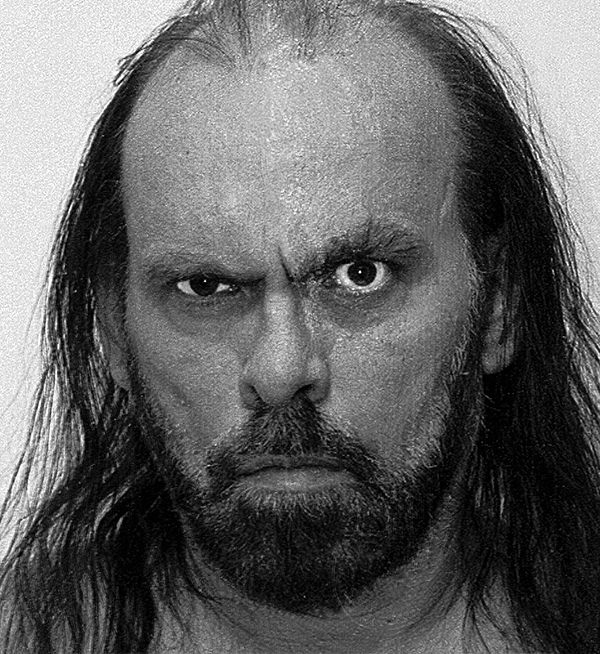
The lead photograph is Raymond Horsch’s 1999 Philadelphia mugshot — the photograph carried with this case by the Philadelphia Inquirer, the New York Post and CBS, held as a public record at Wikimedia Commons (S. E. Stokowski). It is a 1999 photograph, printed because it is the verified likeness in hand; it is not a current image — Horsch died in May 2025, aged 82.
Wikimedia Commons (public record) · Named in: Home · Last checked November 12, 2026 OPEN →
